Janome MOD-30 Sewing Machine Review: Worth It? (November 2026)
The Janome MOD-30 is worth buying if you want a computerized machine with 30 stitches and three one-step buttonholes for garments, home decor and quilts. Choose the MOD-15 instead if you want a simpler mechanical machine and only need basic stitches.
On this page (10 sections)
- The Janome MOD-30 at a glance
- Who the Janome MOD-30 suits
- The specs that matter in daily use
- Setting up the Janome MOD-30
- Using the convenience buttons well
- Buttonholes and decorative stitches in practice
- How to care for the Janome MOD-30
- The trade-offs of the Janome MOD-30
- Alternatives to the Janome MOD-30
- The verdict on the Janome MOD-30
The Janome MOD-30 is worth buying if you want a computerized machine that covers garments, home decor and quilting without stepping up to a larger model. Its 30 stitches and three one-step buttonholes handle more projects than a basic mechanical machine, and the backlit display keeps stitch changes quick.
That makes it a strong first computerized machine for someone who already knows the basics and wants room to grow. If you only need straight and zigzag stitches, the simpler MOD-15 is the easier machine to run day to day.
The Janome MOD-30 at a glance
The MOD-30 pairs 30 built-in stitches with a one-hand needle threader and a backlit LCD display. It sits in the middle of the Janome MOD line: more capable than the entry models, but still compact enough for a dedicated sewing corner.
Janome MOD-30: Best for garments and buttonholes
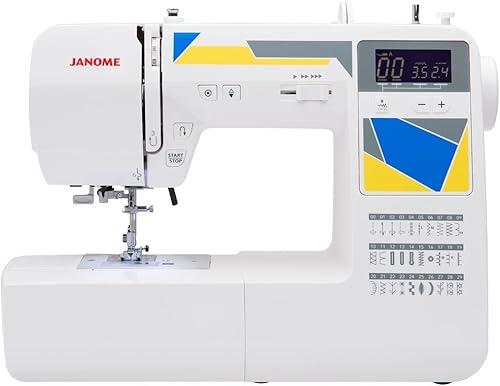
- 30 built-in stitches
- 3 one-step buttonholes
- One-hand needle threader
- Backlit LCD display
- Drop feed and free arm
- 25-year limited warranty
A computerized Janome with enough stitches and buttonhole options to carry you through garments, home decor and quilting. The backlit screen and convenience buttons make everyday stitching easier.
Pros
- Three one-step buttonholes speed up garment work
- One-hand needle threader helps with fine thread
- Backlit LCD display makes stitch selection clear
- Start/stop, reverse and needle up/down buttons cut down on hand strain
- Drop feed and free arm open up free-motion and cuff work
- 25-year limited warranty
Cons
- Heavier than the MOD-15 at 12.7 lb
- Computerized controls mean a learning curve
- No speed control slider stated
- Zigzag foot is the main included foot
It measures 7 inches deep, 16 inches wide and 12 inches tall and weighs 12.7 pounds. That weight helps it stay put while you sew, but it's heavier than the smaller MOD-15 if you need to move it between rooms.
Who the Janome MOD-30 suits
Buy the MOD-30 if you sew garments and want one-step buttonholes without hand-finishing every closure. Three one-step buttonholes let you move from shirts and dresses to home decor without switching machines or feet.
It also fits quilters who want a drop feed for free-motion work. The seven-piece feed dog system and the drop feed setting give you more control over fabric movement than a basic entry machine.
Skip it if you mostly mend hems and patch jeans. A mechanical machine with a handful of stitches is cheaper, simpler and less to learn, and the MOD-30's extra stitches would sit unused.
The other reason to skip is space. If your sewing area is tight, measure the 16-inch width and 12-inch height before buying, and plan where the foot pedal cord will run.
The specs that matter in daily use
The features that change how the MOD-30 feels day to day are the threading, the bobbin and the controls. Those three decide how fast you get from sitting down to stitching.
Start with threading. The one-hand needle threader lets you thread the needle without holding the thread and needle together, which helps with fine thread and tired eyes.
The top-loading bobbin under a clear cover lets you see how much thread is left before you start a seam.
Then look at the controls. A start/stop button means you can sew without the foot pedal, and reverse, locking stitch and needle up/down buttons keep your hands near the fabric.
The backlit LCD display and navigation keys make stitch selection clear.
Finally, the stitching hardware. The 30 stitches cover straight, zigzag and decorative work, and the three one-step buttonholes handle garment closures.
The seven-piece feed dog system moves fabric evenly, and the free arm exposes the narrow bed for cuffs and sleeves.
| Feature | Janome MOD-30 |
|---|---|
| Stitches | 30 built-in |
| Buttonholes | 3 one-step |
| Needle threading | One-hand needle threader |
| Bobbin | Top loading with clear cover |
| Feed dogs | 7-piece |
| Controls | Start/stop, reverse, locking stitch, needle up/down |
| Display | Backlit LCD with navigation keys |
| Bed | Free arm with drop feed |
| Weight | 12.7 lb |
| Warranty | 25-year limited |
None of these features is unusual for a computerized machine at this level. What matters is that the set works together: the needle threader helps at the start of a seam, the start/stop button helps mid-seam, and the drop feed helps when you want to move the fabric yourself.
Setting up the Janome MOD-30
Set up the MOD-30 by threading the machine in order, winding the bobbin and testing stitches on a scrap first. The order matters more than the steps, so follow the threading path from spool to needle without skipping the tension discs.
Start with the bobbin. Wind it as the manual directs, then drop it into the top-loading case under the clear cover.
Pull the thread up through the needle plate before you thread the needle.
Then thread the top. Use the one-hand needle threader to pass the thread through the eye, and keep the presser foot up while you thread so the tension discs stay open.
Choose a stitch on the backlit display. Before you sew on your project, run a test seam on a scrap of the same fabric.
Adjust stitch length and width until the seam lies flat and the stitches don't pucker.
If the machine feels stiff or skips stitches on the first try, rethread the top and check the bobbin direction. Most first-seam problems come from threading, not from the machine.
Using the convenience buttons well
The start/stop and needle up/down buttons change how you control the machine, and using them well makes long seams easier. They're the features that set the MOD-30 apart from a mechanical machine.
The start/stop button lets you sew without the foot pedal. That helps on long straight seams where your foot tires, and it gives you a steady speed on curves when you guide with both hands.
The needle up/down button stops the needle in the fabric or above it. Set it to stop up when you turn corners and down when you pivot, so the fabric doesn't shift.
The locking stitch button ties off the seam ends so you don't need to backstitch by hand. The reverse button still works for traditional backstitching when you want it.
These buttons are small, so give yourself a session or two to build the habit. Once they're second nature, you'll reach for the start/stop button more often than the pedal on long seams.
Buttonholes and decorative stitches in practice
The MOD-30's three one-step buttonholes are the headline feature for garment sewers. One-step means the machine builds the buttonhole in a single sequence, so you don't change settings partway through.
Fit the buttonhole foot, set the button in the guide and let the machine stitch the four sides. Test on a scrap first, because fabric thickness changes the result and you may need to adjust stitch length.
The remaining 27 stitches cover straight seams, zigzag for stretch fabrics and decorative patterns for hems and home decor. Decorative stitches are useful on table linens, pillow edges and children's clothes, where a plain seam looks unfinished.
For quilting, the drop feed lets you lower the feed dogs and move the fabric yourself. You'll want a free-motion or darning foot for that work, since the zigzag foot that comes with the machine is meant for regular seams.
How to care for the Janome MOD-30
Care for the MOD-30 by keeping the bobbin area clean and covering the machine when it's not in use. Lint is the main enemy of any sewing machine, and the top-loading bobbin area collects it fast.
Remove the bobbin cover and brush out lint after every few projects. Follow the manual for the exact cleaning steps, and never blow lint into the machine with compressed air, since that pushes it deeper.
Wipe the exterior with a soft, dry cloth. Keep the machine covered when it's idle so dust doesn't settle into the needle plate and feed dogs.
Change the needle regularly. A dull needle causes skipped stitches and can damage fabric, and the needle type should match the fabric you're sewing.
Keep the foot pedal cord and power cord clear of the fabric path. Store the accessories in a box or bag so feet and bobbins don't get lost between projects.
The trade-offs of the Janome MOD-30
The main trade-off is weight and complexity for the extra stitches. At 12.7 pounds the MOD-30 is heavier than the MOD-15, so it's less convenient if you sew at the kitchen table and pack up afterward.
The computerized controls also mean a learning curve. A mechanical machine with dials is quicker to pick up, while the MOD-30 asks you to learn the display and the convenience buttons before you get the most from it.
The included accessories are modest. The machine comes with a zigzag foot, so plan to buy a buttonhole foot if one isn't in the box, plus a free-motion foot if you want to quilt.
Finally, the MOD-30 doesn't have every feature a higher-tier machine offers. If you need an automatic thread cutter or a speed control slider, you'll want to look at a different model.
Alternatives to the Janome MOD-30
The MOD-30 isn't the only Janome worth considering. The two machines below cover the same ground with different priorities, and the Brother comparison helps if you're still deciding between brands.
Janome MOD-15
The MOD-15 is the easier machine to learn. It has 15 stitches including one four-step buttonhole, automatic tension and a top-loading bobbin, and it comes with four presser feet.
Choose it if you sew simple projects and don't need decorative stitches. It's lighter than the MOD-30 at 11.7 pounds and has no display to learn, so it's the better pick for a first machine or a small space.
Skip it if you want one-step buttonholes. The MOD-15's buttonhole is four-step, which takes more steps and more practice to get consistent results.
Janome MOD-19
The MOD-19 sits between the two. It has 19 stitches, one four-step buttonhole, a built-in needle threader and five feed dogs, plus four presser feet.
Pick it if you want a mechanical machine but need more stitches than the MOD-15 offers. It's a good step up for someone who sews garments and small home projects but doesn't want computerized controls.
The MOD-30 still wins on buttonholes and stitch count. If buttonholes matter to you, the three one-step options on the MOD-30 are worth the extra learning.
Janome 2212 and Brother machines
If you want to compare within the Janome line, our Janome 2212 sewing machine review covers a mechanical option with a strong following. For brand comparisons, read Brother vs Janome sewing machines before you decide.
The Brother ST371HD is a heavier-duty mechanical machine for thick fabrics, and the Brother XR3774 adds quilting features. Either could suit you better if your projects lean toward upholstery or quilting.
The verdict on the Janome MOD-30
Buy the Janome MOD-30 if you want a computerized machine with 30 stitches and three one-step buttonholes for garments, home decor and light quilting. It's the strongest pick in the MOD line for someone who wants room to grow without a large cabinet.
Skip it if you only need basic stitches. The MOD-15 is simpler, lighter and easier to learn, and the MOD-19 is the middle ground if you want more stitches without a screen.
Our score weighs specs, features and how well the machine fits what you're shopping for. At 7.4, the MOD-30 earns its place for buttonhole work and stitch variety, with the weight and learning curve as the honest costs.
Before you buy, decide which matters more: one-step buttonholes and a display, or a mechanical machine you can run without reading a screen. That answer points you to the right Janome.
Frequently asked questions
How many stitches does the Janome MOD-30 have?
The Janome MOD-30 has 30 built-in stitches, including three one-step buttonholes. That covers straight, zigzag and decorative options for garments, home decor and quilting without swapping machines.
Does the Janome MOD-30 have a needle threader?
Yes. It has a one-hand needle threader that lets you thread the needle without holding the thread and needle at the same time.
That helps with fine thread and when your eyes are tired.
What kind of bobbin does the Janome MOD-30 use?
It uses a top-loading bobbin under a clear cover. The clear cover lets you see how much thread is left, and the seven-piece feed dog system helps move fabric evenly.
Can the Janome MOD-30 do free-motion quilting?
Yes. The drop feed feature lets you lower the feed dogs so you can move fabric freely for free-motion quilting and darning.
Pair it with a darning or free-motion foot for the best results.
Is the Janome MOD-30 good for beginners?
It suits beginners who want room to grow. The backlit display and one-hand needle threader make setup easier, but the computerized controls take a little practice compared with a mechanical machine like the MOD-15.


