What to Look for When Buying a Sewing Machine
What to look for when buying a sewing machine depends on your projects. Match its stitches, threading, bobbin, feet, workspace and fabric controls to the work you plan to do most.
On this page (11 sections)
- What should you look for when buying a sewing machine?
- How many stitches do you need?
- Which threading and bobbin features make setup easier?
- What presser feet and accessories should be included?
- How much workspace and what kind of free arm do you need?
- Do you need a standard or heavy-duty machine?
- Which sewing machine features fit different buyers?
- How should you compare support and warranty terms?
- What care and use habits help a new machine sew well?
- What mistakes should you avoid when buying a sewing machine?
- What should you decide before buying a sewing machine?
What to look for when buying a sewing machine starts with the projects you plan to sew most. Match the stitches, threading, bobbin, presser feet, workspace and fabric controls to your skill level and the materials you expect to use.
A machine for basic hems and repairs can be simple. Garment sewing, quilting or thick layers may call for other features, so write down a few projects before comparing models.
For a broader model comparison, see our guide to how to pick the best sewing machine for your home.
What should you look for when buying a sewing machine?
Look for functions that make your regular projects easier, not the longest feature list. Use this checklist to narrow your choices before you compare individual models.
| Check | What to consider |
|---|---|
| Stitches | Straight and zigzag cover many basic tasks; add specialty stitches when a project needs them |
| Buttonholes | Check whether the machine makes a buttonhole in one step |
| Threading | Look for a threading path and needle setup you can follow |
| Bobbin | Compare top drop-in and front-loading styles, including how easy they are to reach |
| Presser feet | Match the included feet to your projects |
| Workspace | Consider room between the needle and machine body for larger fabric pieces |
| Fabric controls | Look for controls that suit the fabrics and layers you plan to sew |
| Support | Check the manual, warranty terms and available brand support |
Start by listing 2 or 3 things you expect to make during your first few months. A planned pair of curtains, for example, makes workspace and fabric handling more relevant than decorative stitches you may never use.
Separate must-haves from nice-to-haves. Useful threading help may matter if you sew often, while an extensive stitch menu may add little value if you mainly mend clothing.
How do your projects affect what to look for when buying a sewing machine?
Your sewing plans should decide which features matter most. A machine for simple repairs does not need the same controls as one for garments, quilting or thick home décor fabric.
For clothing alterations, consider a free arm for cuffs and pant hems, a zipper foot, and stitches suited to seams and stretch fabric. Our guide to sewing machine presser feet explains what common feet do.
For quilts or large panels, check the space around the needle and how you will arrange fabric on your table. If you plan to sew denim, canvas or several layers, look for model-specific guidance and controls for handling different fabrics.
Think about how often you will do each type of work. A machine that fits your weekly projects is usually a better match than one chosen around a single ambitious project.
How many stitches do you need?
Most beginners can start with a small group of practical stitches, including straight, zigzag and a buttonhole option. Extra stitches are useful when they support techniques you plan to use, but a large count does not make a machine easier by itself.
Check what the stitch options do. Stretch stitches can help with stretchy materials, while decorative stitches add patterns.
Consider both when they fit your sewing plans.
Stitch length and width controls also affect everyday work. They let you adjust seams and finishing, which can be more useful than a long menu of designs.
Make sure you understand how to select and adjust stitches before sewing on your project fabric. Practice on a scrap of similar material first, especially when changing to a stitch you have not used before.
For a closer look at stitch functions, read our guide to types of sewing machine stitches.
Which threading and bobbin features make setup easier?
Choose threading and bobbin features that make routine setup clear. An automatic needle threader helps guide thread through the needle, while a top drop-in bobbin can make loading and checking thread more direct.
Before your first seam, follow the manual's threading path and confirm that the presser foot is raised where required. Incorrect threading can lead to loose stitches, tangles or thread that slips out of place.
Wind a bobbin with the machine's recommended steps, then check that it sits in the correct direction and that the thread runs through its guides. Keep the top thread and bobbin thread colors distinct while learning so you can see how each one forms a stitch.
Do not pull fabric through the machine to force it along. Let the feed system move it while you guide the material, and use a scrap to check the stitch before starting a finished garment.
Our first-day sewing machine guide covers basic setup and use, and our bobbin winding guide walks through winding one.
What presser feet and accessories should be included?
Check the included feet against the work you expect to do. An all-purpose foot supports everyday sewing, while zipper, buttonhole, blind hem and button-sewing feet help with specific tasks.
Accessories may also include needles, bobbins, a seam ripper or a manual. Compare what comes with the machine to what you already own, then note any extras you will need for your first projects.
A useful set of feet can make a first machine more ready for common tasks. It does not mean every accessory will suit every project, so check each foot's purpose before relying on it.
Use the right foot for the stitch and technique. For example, a zipper foot gives room to sew close to zipper teeth.
An all-purpose foot is the general choice for straight seams. Our guide to presser feet and what they do covers the common options.
How much workspace and what kind of free arm do you need?
Workspace affects how easily you can handle broad fabric pieces, while a free arm helps with cylindrical areas such as cuffs and pant legs. These features solve different problems, so check which one your projects call for.
The needle-to-arm space is the area to consider for quilts, curtains and other large pieces. A larger workspace can give you more room to position fabric, though you still need enough table space around the machine to support the material.
A free arm exposes a narrower sewing surface for small or tubular items. It is useful for hems and sleeves.
It does not create extra room for a wide quilt panel. Read our explanation of what a free arm does if you are unsure which feature you need.
Also compare the machine's dimensions and weight with your storage spot and table. If you will put it away after each session, consider how easy it will be to move safely.
Do you need a standard or heavy-duty machine?
Choose a machine for the fabrics you sew regularly, not the heaviest material you might try once. A heavy-duty model may suit frequent work with thick fabrics or layers, while a standard home machine may suit lighter materials and common alterations.
Compare the specific features that affect your work, such as presser-foot pressure, feed controls and guidance for the fabrics you plan to sew. The words “heavy duty” alone do not tell you how a machine is set up for each task.
Use the right needle and thread for the fabric, and test the setup on a scrap before sewing a finished piece. For thick seams, avoid rushing through several layers and check that the foot can sit level over the area.
If thick materials are a regular part of your plans, compare the trade-offs in heavy-duty vs. regular sewing machines.
Which sewing machine features fit different buyers?
The right model depends on the balance of features you need, such as heavy fabric handling, a broader stitch menu or a straightforward everyday setup. These options illustrate how those priorities can lead to different choices.
Singer 4423: what to look for when buying a sewing machine for thick fabrics
The Singer 4423 offers 23 stitches with 97 applications, a one-step buttonhole and adjustable presser-foot pressure. Its heavy-duty frame, stainless-steel bedplate and high-speed motor suit buyers who expect to sew thick fabrics or layers regularly.
It also has an automatic needle threader and a top drop-in bobbin with a transparent cover. Choose it if frequent work with denim, canvas or similar materials is part of your plan; skip it if your sewing is mostly lightweight repairs and you want a lighter machine to move around.
The machine weighs 17.1 pounds, so consider where it will sit and how you will store it. The included feet cover all-purpose sewing, zippers, buttonholes and button sewing, with a quilting guide among the other accessories.
Brother XM2701: everyday projects and free-arm sewing
The Brother XM2701 has 27 built-in stitches, including decorative, blind hem, zigzag and stretch options, plus an auto-size buttonhole. Its six included feet and free arm suit everyday sewing, hems and cuffs.
Choose it if you want a range of common stitch types and a free arm for clothing work. Skip it if thick, layered materials are a frequent priority and you want a machine specifically equipped for that kind of sewing.
The automatic needle threader and drop-in top bobbin can make routine setup more direct. The machine is intended for sale in the United States at 120 volts, so confirm voltage compatibility before buying for use elsewhere.
Brother CS5055: a larger stitch menu and workspace
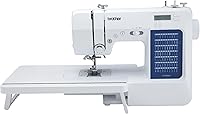
The Brother CS5055 includes 60 built-in stitches, 7 one-step auto-size buttonholes and an LCD display. Its seven included feet and larger needle-to-arm workspace suit buyers who want more stitch choices and room to manage larger fabric pieces.
Choose it if a display and a broader menu of utility, decorative and heirloom stitches match your plans. Skip it if you prefer simple physical controls or will rarely use the extra stitch options.
Its fixed needle bar is designed to keep the needle in place while sewing. Like the XM2701, this machine is intended for sale in the United States at 120 volts, so check compatibility in your location.
Singer 4523: speed control and sewing options
The Singer 4523 includes 23 built-in stitches, speed control, a one-step buttonhole and an integrated needle threader. Its control for setting maximum speed can suit a newer sewist who wants to manage pace on curves and detailed sections.
Choose it if you want a heavy-duty mechanical machine with control over sewing speed and a free arm for hems and cuffs. Skip it if you want a computerized display or a machine whose main appeal is a large built-in stitch menu.
Its accessories include all-purpose, buttonhole, zipper and blind hem feet, along with needles, bobbins, a quilting guide and a seam ripper. Compare those included feet with the projects you expect to start.
How should you compare support and warranty terms?
Check the manual, warranty terms and support options for the exact model and your location. Clear instructions can help when you are learning threading, stitch selection, bobbin setup and routine care.
Support and warranty details vary by model. Brother offers online, live chat or phone technical support for the XM2701, while the CS5055 includes a 25-year limited warranty and lifetime technical support.
Read the warranty conditions before you decide. The XM2701 and CS5055 are intended for sale in the United States at 120 volts, so confirm compatibility if you are buying elsewhere.
What care and use habits help a new machine sew well?
Follow the manual for cleaning and maintenance, because the steps can differ by model. Unplug the machine before cleaning, remove lint from accessible areas as directed, and use only the care products and oiling steps the manual recommends.
Keep the machine covered when it is stored and protect its accessories from dust and loss. Replace a needle when it is bent or damaged, and use a needle suited to the fabric and thread.
If stitches look uneven, pause and check the basics before changing several settings at once. Rethread the machine, check the bobbin placement, confirm the presser foot and stitch selection, then test on a scrap.
Avoid sewing over pins, pulling fabric forcefully or using the wrong foot for a stitch. These habits can damage a needle, disrupt the seam or make it harder to identify the cause of a problem.
What mistakes should you avoid when buying a sewing machine?
The most common mistake is choosing by stitch count or a “heavy-duty” label without matching the machine to your actual projects. A long menu cannot compensate for missing workspace or a foot you need every week.
Do not assume every machine uses the same needle, bobbin or accessories. Check model compatibility before buying replacements, and keep the manual available for threading, cleaning and troubleshooting.
Also avoid treating speed as a measure of beginner-friendliness. A machine with high maximum speed may still need careful control, so a speed control or pedal response that feels manageable can matter more than the top rate.
Finally, do not buy for every possible future project. Choose a machine that handles your regular work, then add specialized tools when a real project calls for them.
What should you decide before buying a sewing machine?
To decide what to look for when buying a sewing machine, match the features to your first projects and the fabrics you expect to sew. Pick a straightforward everyday model for basic repairs, a broader stitch menu if you will use those choices, or a heavy-duty option when thick layers are routine.
Before deciding, list your must-have stitches, feet, threading help, workspace and fabric needs. Then compare suitable models in our home sewing machine guide.
Frequently asked questions
How many stitches should a beginner sewing machine have?
A beginner can start with a few useful stitches, such as straight, zigzag and a buttonhole option. More built-in stitches add decorative or specialty choices, but they matter less if your projects mainly involve hems, repairs and simple seams.
Check that the machine has the stitch types you expect to use.
Is an automatic needle threader worth having?
An automatic needle threader can make setup easier by guiding thread through the needle. It is a convenience feature, not a replacement for learning the full threading path.
Check the manual for the threading steps and choose a setup you can follow comfortably.
Do I need a heavy-duty sewing machine?
Choose a heavy-duty machine if thick fabrics or multiple layers are regular projects, and compare the model's controls and fabric guidance. For occasional hems, repairs and lightweight fabric, a standard home machine may cover your needs.
A heavy-duty label alone does not guarantee a fit for every project.
Which presser feet should come with a sewing machine?
Start with feet that match your projects. An all-purpose foot suits everyday seams, a zipper foot helps install zippers, and a buttonhole foot supports buttonholes.
Compare the included feet with the techniques you plan to use, then account for any extra feet you may need.
Should I buy a mechanical or computerized sewing machine?
A mechanical machine uses physical controls to select settings, while a computerized model can offer an LCD display and a wider menu of built-in stitches. Choose based on which controls feel clear to you and which functions your projects need.
Our guide to types of sewing machines explains the main differences.