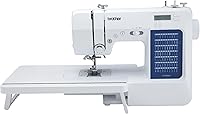
Bernette B37 Sewing Machine Review: Worth It? (November 2026)
The Bernette B37 is a strong step-up choice for sewers who want more built-in stitches and adjustable stitch settings without paying computer-machine prices. Buy it if your projects are growing; choose a simpler mechanical model if you mostly hem and mend.
On this page (7 sections)
The Bernette B37 is a sensible step-up sewing machine for someone who has outgrown a basic model and wants more stitches and finer control over stitch width and length. It sits below Bernette's computerized machines, so you get more variety than an entry model without the screen-driven menus.
This bernette b37 sewing machine review covers what the machine is built to do, how it fits a growing sewer's daily work and where a simpler or more advanced model makes better sense. Buy the B37 if your projects are getting more varied; skip it if you mostly shorten hems and patch jeans.
The Bernette B37 at a glance
The B37 is a mechanical step-up machine in Bernette's range, aimed at sewers who want a wider stitch menu than a starter model offers. It rewards a sewer who reads the manual and adjusts settings rather than one who wants everything automatic.
Bernette Bobbins [10 Pack]: Best for keeping B37 spares on hand

- 10-pack of plastic bobbins
- Fits Bernette B37 and related models
- Consistent thread winding
A 10-pack of plastic bobbins made for the Bernette B37 and its siblings. Extra bobbins let you switch thread colors without stopping to rewind.
Pros
- Fits the B37 directly
- Ten bobbins cover several thread colors
- Lightweight plastic winds evenly
Cons
- Only suits Bernette models, not other brands
That card shows the bobbins rather than the machine, because the B37's own accessories are what most owners end up buying first. A 10-pack of Bernette plastic bobbins keeps several thread colors wound and ready, so a color change doesn't mean stopping to rewind.
The pack fits the B37 directly, and the same bobbins also suit the B79, B77, B70, B38, B05 Academy, B05 Crafter and the B79 Yaya Han edition. That shared fit matters if you later add a second Bernette to the house or sew alongside a friend who owns one.
The pack weighs 1.13 ounces and measures 5.98 by 3 by 1 inches, so it tucks into a drawer or a machine tote without taking up room. Ten bobbins is enough to keep a neutral thread, a matching thread for each current project and a spare or two waiting for the next color.
Who the B37 is built for
The B37 suits a sewer who has finished a few garments or bags and now wants decorative stitches, adjustable stitch length and a machine that holds its settings. It's also a reasonable fit for someone returning to sewing after years away, since the controls are physical dials rather than screen menus.
It's less suited to a complete beginner who hasn't threaded a machine before. A simpler mechanical model with fewer choices gets a new sewer stitching sooner, and the B37's extra settings only help once the basics feel natural.
The machine also rewards a sewer who plans projects in advance, because knowing which stitch and setting a garment needs is half the battle with a dial-based machine. If your sewing is mostly repairs, the extra stitch menu sits unused while you pay for it.
The specs that matter in daily use
The B37's value comes from its stitch variety and adjustable settings, not from a screen or automatic features. Those are the things you'll notice every time you sit down to sew.
Stitch selection runs to a broad menu for a mechanical machine, covering utility stitches for seams and hems plus decorative options for finishing touches. Adjustable stitch width and length let you tune a satin stitch or a buttonhole rather than accept one fixed setting.
A buttonhole that follows the button's size and the fabric's thickness looks far neater than one forced into a single preset, and on the B37 you set that yourself with the dials.
The machine uses Bernette's own plastic bobbins, which is why a spare pack matters. A drop-in bobbin setup makes loading quicker than a front-loading case, and the top-loading design is easier to see when you're checking thread tension.
The bobbin area is also easy to reach for the lint brush, which keeps skipped stitches rare.
For a sewer moving up from a starter model, the practical gain is control. You can change how wide a zigzag sits or how long a straight stitch runs, which matters for stretch fabrics, topstitching and buttonholes.
That adjustability is what separates the B37 from a bare-basics machine. A fixed-setting starter machine sews one zigzag; the B37 lets you narrow it for a delicate edge or widen it for a sturdy bar tack.
Those small choices add up over a garment, and they are the reason a step-up machine earns its price.
Setting up the B37 for your first project
Set the machine up on a sturdy table with room behind and beside it, then work through the manual's threading steps before you sew. Rushing the threading is the most common reason a first seam looks wrong.
Wind a bobbin with the thread you plan to use and load it into the top-loading case. Check that the thread sits in the case correctly and that the bobbin turns the right way; a bobbin loaded backward causes skipped stitches and tangles.
Winding a few bobbins ahead of time in your common colors means a project never stalls waiting on a rewind.
Thread the upper path in the order the manual shows, then bring the bobbin thread up through the needle plate. Pull both threads back under the presser foot before you start, and test on a scrap of the fabric you're about to sew.
The scrap test tells you more than any chart, because the same stitch behaves differently on cotton, jersey and canvas.
Set stitch width and length for the fabric rather than leaving the dials wherever they sat last. A straight stitch for woven cotton needs different settings than a stretch stitch for jersey, and the manual's chart gives you a starting point.
Write your favorite settings on a card taped inside the machine lid so you don't have to rediscover them each time.
Choosing feet and accessories
The B37 takes Bernette's presser feet, so plan which feet your projects need before you buy extras. A zipper foot and a buttonhole foot cover most garment work, while a quilting foot helps if you piece.
A walking foot is worth adding if you sew thick fabrics or quilts, because it feeds the top and bottom layers together. Check the foot fits your model before ordering; Bernette lists compatible feet by machine.
The Bernette B33 sewing machine reviews cover a sibling model if you're still deciding between the two. The B33 is the more basic option, and the comparison helps if you're unsure how much machine you need.
Between the two, the B37 is the one to pick when stitch variety is the reason you're upgrading at all.
How to care for the B37
Clean the bobbin area and under the needle plate after every few projects, and cover the machine when it's not in use. Lint buildup is the main cause of skipped stitches and tension trouble on any mechanical machine.
Remove the needle plate and brush out lint around the bobbin case with the small brush that comes with the machine. Don't blow into the case, since breath pushes lint deeper into the mechanism.
Pay extra attention after knits and fuzzy fabrics, which shed more than crisp cotton.
Change the needle when it dulls or after a heavy project, and match the needle type to the fabric. A bent or blunt needle causes skipped stitches that no amount of tension adjusting will fix.
Keep a small stock of universal and stretch needles so a dull point never forces you to push through a project.
Oil the machine only where the manual says to and with the oil it specifies. Over-oiling attracts lint and can stain fabric, so a little in the right places beats a lot anywhere.
A drop in the spots the manual marks, after a stretch of heavy use, keeps the mechanism running smoothly.
Keep the machine covered to stop dust settling into the bobbin area. A simple cloth cover is enough, and it saves cleaning time between projects.
Store your spare bobbins in the same cover or a small tin so they stay clean and ready.
The trade-offs to weigh before buying
The B37's main trade-off is that it's mechanical rather than computerized, so it has no screen and no one-touch stitch selection. You choose stitches with dials, which is fine once you know the machine but slower than a screen for someone who switches stitches constantly.
There is also no memory for saved settings, so each new project starts with the dials wherever you left them.
It also sits in the middle of the market, so it costs more than a basic starter machine without offering the automated features of a computerized model. If you want an LCD display, a wide table and dozens of stitches, a computerized machine gives more per dollar.
The B37's answer is durability and simplicity: fewer electronics means less to fail and a machine that behaves the same on day one thousand as on day one.
The machine takes Bernette-specific bobbins and feet, so accessories cost a little more and are less widely stocked than Brother or Singer parts. Buy a spare bobbin pack with the machine so a full bobbin never stops a project.
The bobbins are inexpensive, and having ten on hand means you can wind a whole set of colors in one sitting.
Finally, the B37 is a home machine rather than a heavy-duty one. It handles garments, bags and quilting, but very thick layers or constant canvas work call for a machine built for that load.
Know which side of that line your sewing falls on before you commit.
Alternatives worth comparing
The B37 makes most sense against two kinds of machine: simpler Brother models for a first purchase and a computerized Brother for quilting. Here's how each compares.
Brother XM2701 for a first machine
The Brother XM2701 is the lighter, simpler pick for a new sewer. It has 27 built-in stitches and an automatic needle threader, and at 12.6 lb it's easy to move and store.
It comes with six feet and a 25-year limited warranty. Its drop-in top bobbin is jam resistant, which takes some of the fear out of the first bobbin load.
The B37 offers more stitch variety and finer adjustment, so choose the Brother if you're just starting and want the easiest path to a first seam. Choose the B37 if you already sew and want room to grow.
Brother CS7000X for quilting and bigger projects
The Brother CS7000X is the computerized step up for quilting. It has 70 built-in stitches, seven one-step buttonholes, an LCD display, a wide table, 10 feet, a hard case and a metal frame with a fixed needle bar.
That package beats the B37 for large projects and stitch variety. Its larger needle-to-arm space matters when you roll a quilt through the machine.
Pick the CS7000X if quilting or big bags are the plan; pick the B37 if you want mechanical controls and a lower-cost step up. The Brother ST371HD review covers a heavier-duty option if thick fabric is your main material.
Verdict: should you buy the Bernette B37?
Buy the Bernette B37 if you've outgrown a starter machine and want more stitches and adjustable settings without a screen. It's a solid middle step for garment sewing, bags and general projects, and the mechanical controls are easy to live with once you know them.
The dials also mean fewer things to break, which suits a sewer who wants a machine to last through years of projects rather than chase the newest features.
Skip it if you're a complete beginner who wants the simplest possible start; the Brother XM2701 gets you sewing faster. Skip it too if quilting or large projects are the plan, since the Brother CS7000X offers a wide table, more stitches and a hard case for that work.
For everyone in between, the B37 earns its place. Pair it with a spare pack of Bernette bobbins so thread changes don't slow you down, and it will handle years of everyday projects.
Frequently asked questions
Is the Bernette B37 good for beginners?
It suits a beginner who has already sewn a little and wants room to grow. A simpler mechanical machine is easier to learn on, but the B37's adjustable stitch width and length reward practice.
What bobbins does the Bernette B37 use?
The B37 takes Bernette's own plastic bobbins. A 10-pack keeps spares ready so you can change thread colors without rewinding the same bobbin.
How does the Bernette B37 compare with a Brother machine?
The B37 sits between basic and computerized models. Brother's XM2701 is lighter and simpler for a first machine, while the CS7000X adds an LCD display, a wide table and more stitches for quilting.
Do I need a wide table for the Bernette B37?
Only if you plan to quilt or sew large projects. For garments, bags and everyday mending, the standard bed is enough and the machine stays easier to store.