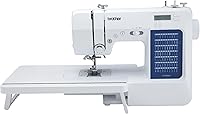
Juki HZL-G120 Sewing Machine Review: Worth It? (November 2026)
The Juki HZL-G120 is a strong pick for sewists who want computerized stitch choice and quilting features in one machine. Its box feed system and drop feed suit garment seams and free-motion work, while 8 buttonhole styles cover most everyday projects.
On this page (8 sections)
The Juki HZL-G120 is a solid buy for sewists who want computerized stitch control and quilting capability in one machine. Its box feed system and drop feed dogs handle garment seams and free-motion work, and 8 buttonhole types cover most everyday projects.
The main trade-off is weight: at 19 lb it stays put on a table rather than traveling to classes.
This review looks at what the HZL-G120 offers, who it fits and where a different machine makes more sense. Our score weighs specs, features and buyer feedback against what you're shopping for.
The Juki HZL-G120 at a glance
The HZL-G120 packs 180 stitch patterns and a font into a computerized machine with a hard cover. It's built for sewists who want variety without moving up to a larger quilting machine.
Juki HZL-G120 Sewing Machine: Best for computerized quilting and garment sewing

- 180 stitch patterns and 1 font
- Box feed system
- Automatic needle threader
- 8 buttonhole types
- Drop feed for free-motion quilting
- Hard cover included
A computerized Juki built for both garment seams and quilting, with a box feed system that keeps fabric moving evenly and 180 stitch patterns to work through.
Pros
- Box feed reduces fabric shifting and shrinking
- Drop feed dogs make free-motion quilting simple
- 8 buttonhole types cover shirts, trousers and home decor
- Automatic needle threader saves time on every project
- Hard cover protects the machine between sessions
Cons
- 19 lb is heavy to carry to classes
- Computerized controls take time to learn after a mechanical machine
- Fewer buttonhole types than some rivals offer
The machine's core strength is fabric handling. Juki's box feed moves the feed dog in a box motion, which the brand says cuts down on shrinking and shifting.
That matters most on stretchy knits, slippery fabrics and layered seams. The machine measures 23 inches deep, 15.75 inches wide and 12.75 inches high, so plan for a fair amount of table depth behind the needle.
The stitch menu is broad for this class. You get 180 stitch patterns plus a font, which means utility stitches, decorative patterns and letters from one machine.
The font is the unusual part; most machines at this level give you stitches and leave lettering to a separate setup.
Where the Juki HZL-G120 fits best
Buy it if you sew garments and quilts on the same machine and want stitch variety built in. The 8 buttonhole types alone cover shirts, trousers, home decor and stretch fabrics without swapping to a separate buttonhole attachment.
Skip it if you need a machine to carry weekly to a class. The 19 lb weight and 23-inch depth make it a stay-at-home machine.
A lighter mechanical model travels better.
Who the Juki HZL-G120 suits
The HZL-G120 suits sewists who have outgrown a basic mechanical machine and want computerized stitch selection without jumping to a large quilting frame setup. It also fits quilters who piece and finish smaller projects at home.
If you mainly hem curtains and patch jeans, the 180 stitch patterns are more than you'll use. A simpler machine with fewer stitches costs less and takes less time to learn.
The HZL-G120 earns its place when you'll actually work through the decorative and utility stitches.
Sewists moving from a mechanical machine should expect a short adjustment period. Computerized models select stitches through buttons and a display rather than a dial.
That's not hard, but it's different, and the first few projects go slower while you learn the layout. The font is another feature that rewards patience; lettering takes practice to line up cleanly.
Quilters get the most from the drop feed. Flip the switch and the feed dogs drop away, so you can move the fabric yourself for stippling, meandering and free-hand embroidery.
That one feature saves buying a second machine for quilting.
Home decor sewists also fit here. Cushion covers, curtains and table linens often need a strong straight stitch and a decorative option for hems and borders.
The box feed helps with the heavier fabrics those projects use.
The specs that matter in daily use
The 180 stitch patterns and 1 font are the headline, but the feed system shapes your everyday results more. A machine with a weak feed drags on thick seams and shifts on thin fabric; the box feed aims to prevent both.
Juki's box feed moves the feed dog in a rectangular path. Instead of pushing fabric straight through, it holds the fabric more firmly at each stage.
On denim hems, quilt layers and knits, that means fewer puckers and less need to pin every seam.
The improved presser foot construction gives the HZL-G120 strong feeding, and Juki says heavy projects like hemming denim jeans sew with ease. That's a maker claim worth testing on your own fabric before committing to a big project.
Feeding power matters most at seam intersections, where layers stack up and a weak feed stalls or skips.
The 8 buttonhole types cover standard, stretch and decorative shapes. Most sewists use one or two regularly, but having 8 means you can match the buttonhole to the garment rather than forcing one style everywhere.
Stretch buttonholes matter on knits; a standard one can pucker or pull out over time.
The automatic needle threader threads the needle with a lever push. It's a small feature that saves time and eye strain, especially on dark fabric or fine needles.
The hard cover protects the machine from dust between sessions, which matters if it sits out on a table.
The machine runs on corded electric power and the body is plastic, which keeps the weight down at 19 lb for a machine this size. Juki includes the machine, feet, bobbins and needles in the box, so you can start sewing straight away.
Setting up the Juki HZL-G120
Set the machine on a sturdy table at a comfortable height and give it room behind for fabric to feed through. The 23-inch depth means it needs more table space than a compact mechanical model.
Start by winding a bobbin and threading the machine. The automatic needle threader takes over at the needle, so you don't need to squint at the eye.
Follow the threading path in the manual the first few times; computerized machines can be fussy about thread tension if the path is missed.
Pick a basic straight stitch and sew on a scrap of your project fabric. Adjust the stitch length and tension until the seam lies flat.
Doing this on scraps first saves unpicking later. Then run through a zigzag and a decorative stitch so you know where those controls sit before a real project depends on them.
When you're ready to quilt, flip the switch to drop the feed dogs. Fit a free-motion or darning foot and lower the presser foot.
Practice moving the fabric in small circles on a scrap before starting on a real quilt. A darning plate or free-motion foot is not part of the included accessories, so plan to add one.
If you sew heavy material, test a denim hem on a scrap first. The box feed and presser foot construction are built for it, but your needle and thread choice still matter.
Care and maintenance for the HZL-G120
Keep the machine clean and covered between projects to protect the computerized parts. The hard cover that comes with it does most of that job when the machine isn't in use.
Brush lint from the bobbin area and feed dogs after each big project. Lint builds up under the needle plate and can cause skipped stitches or feed problems.
A small brush and a quick pass keeps the box feed working as it should. The box motion moves the feed dog in more than one direction, so lint can collect in spots a straight-feed machine never reaches.
Change the needle regularly. A dull needle causes skipped stitches and can damage fabric, and it's the most common cause of stitch problems on any machine.
Match the needle type to the fabric: sharp for wovens, ballpoint for knits.
Oil the machine where Juki's manual says to, and only there. Computerized machines have specific oil points; adding oil elsewhere can attract lint or affect the electronics.
Store bobbins and feet in a case or drawer, not loose on the table. Small parts go missing easily, and the included feet and bobbins are the ones you'll reach for most.
The trade-offs to know before you buy
The 19 lb weight is the main one. The HZL-G120 stays on a table; carrying it to a class or a friend's house is a chore.
If you need a portable machine, a lighter model makes more sense.
The computerized controls add a learning curve. Sewists used to a dial for stitch selection need time to learn the buttons and display.
It's not difficult, but the first projects go slower while you adjust.
The stitch count is generous, but most sewists use a fraction of the 180 patterns. If you only need straight stitch, zigzag and a buttonhole, a simpler machine covers those at a lower cost.
The HZL-G120 earns its price when you'll use the decorative stitches, the font and the quilting features.
The 8 buttonhole types are useful, but some rivals offer more. If buttonholes are central to your sewing, compare counts before deciding.
Also weigh the plastic body against machines with a metal frame if you plan decades of heavy use.
Alternatives to the Juki HZL-G120
The HZL-G120 is a strong all-rounder, but a few other machines fit specific needs better. Each one below is a real alternative for a named use.
Brother ST371HD for heavy fabrics
The Brother ST371HD is the pick if you sew denim, canvas and upholstery more than quilts. It's a mechanical machine built for thick seams, and it skips the computerized stitch menu that adds a learning step on the HZL-G120.
The trade-off is fewer stitches and no font. If you want variety and quilting features, the HZL-G120 is the better fit; if you want a tough mechanical machine for heavy fabric, the ST371HD makes more sense.
The Lovely Lilac suits a beginner who wants light quilting and garments without a steep learning curve; it has 15 stitches and a 4-step buttonhole, so the HZL-G120's 180 stitches and 8 buttonhole types are a clear step up in range.
Brother XR3774 for quilting on a budget
The Brother XR3774 suits quilters who want a quilting-ready machine without the HZL-G120's price. It's a computerized model with quilting features, and it's a reasonable step down in stitch count and feed sophistication.
Choose the HZL-G120 if the box feed and 180 stitches matter to you. Choose the XR3774 if you want quilting capability at a lower cost and don't need the full stitch range.
Brother XR9550 for the widest stitch range
The Brother XR9550 is the alternative for sewists who want even more stitches and computerized features. It's a computerized sewing and quilting machine with a broad stitch selection.
If you want the most stitches for the money, compare the XR9550 against the HZL-G120 side by side. If feed quality on tricky fabrics matters more, the HZL-G120's box feed is the feature to weigh.
The Janome JW8100 is the better pick for large quilts, since its extra-wide extension table, even feed foot and quarter inch foot support bigger projects; the HZL-G120's edge stays the box feed and its simpler accessory list.
Juki HZL-355ZW-A for a lighter Juki
The Juki HZL-355ZW-A is the Juki to consider if weight and portability matter. It's a lighter machine from the same brand, so you keep the Juki build quality without the 19 lb cabinet.
The HZL-G120 still wins on stitch count and quilting features. Pick the HZL-355ZW-A if you need to move the machine often and can live with fewer stitches.
Verdict: is the Juki HZL-G120 worth it?
The Juki HZL-G120 is worth it for sewists who want one computerized machine for garments and quilting. The box feed handles tricky fabrics, the drop feed opens up free-motion work and 180 stitches plus 8 buttonholes cover most projects.
Our score weighs those specs and features against what a sewist shopping in this range wants.
Buy it if you sew garments and quilts at home and want stitch variety without buying a second machine. The 19 lb weight is fine for a machine that stays on a table.
Skip it if you need portability or you only sew basic seams. A lighter mechanical machine travels better, and a simpler model costs less if you won't use the decorative stitches.
For heavy fabric, the Brother ST371HD is the stronger pick.
If you're still comparing models across brands, the Brother XR9550 offers the widest stitch range in this group. Check the exact included accessories before you order so you know which feet come with the machine.
Frequently asked questions
What is a box feed system on a sewing machine?
A box feed moves the feed dogs in a rectangular motion rather than straight back and forth. Juki says this motion reduces fabric shrinking and shifting, so seams stay even on stretchy, slippery or layered materials.
Can the Juki HZL-G120 do free-motion quilting?
Yes. A switch drops the feed dogs, which lets you move the fabric yourself for free-motion quilting or free-hand embroidery.
You'll need a darning or free-motion foot to go with it, and practice helps before you quilt a full project.
How many buttonholes does the Juki HZL-G120 make?
It offers 8 buttonhole types. That range covers standard shirt and trouser buttonholes plus decorative and stretch options, so you can match the style to the garment rather than settling for one shape.
Is the Juki HZL-G120 good for beginners?
It can work for a beginner who wants room to grow, but the computerized stitch selection adds a learning step. A mechanical machine is quicker to master.
If you plan to quilt or sew garments regularly, the HZL-G120 rewards the extra practice.
What comes in the box with the Juki HZL-G120?
Juki includes the machine, presser feet, bobbins and needles, along with a hard cover. That covers basic sewing from the first session; you'll add specialty feet later for quilting or specific garment techniques.