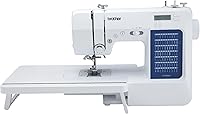
Bernette B38 Sewing Machine Review: Worth It? (November 2026)
The Bernette B38 is a capable mid-range computerized machine, and it suits sewers who want more stitches and a larger work area than an entry model gives. If you mostly run basic seams, the cheaper B33 covers you, and the Brother XR9550 is the stronger pick for quilting.
On this page (8 sections)
The Bernette B38 is a solid mid-range computerized sewing machine for sewers who want a step up from a beginner model without paying flagship prices. It brings more stitches and roomier stitching than the entry-level B33.
Bernette pitches the B38 at people who sew garments, home decor and light quilting. It's the middle child of the b38 family line, sitting between the simple B33 and the larger B79.
Our Bernette B38 sewing machine reviews concentrate on what the machine gives you day to day: stitch choice, threading, bobbin handling and the workspace in front of the needle.
The Bernette B38 at a glance
The B38 is a computerized machine with a broad stitch menu and Bernette's usual Swiss design language. It suits a sewer who has outgrown a basic mechanical model and wants stitch selection at the touch of a button.
Bernette Bobbins [10 Pack]: Best for keeping the B38 winding

- 10 bobbins
- Fits B38 and other Bernette models
- Durable plastic
Bernette's own bobbins, cut for the B38 and its siblings, so thread winds evenly and you can swap colors without emptying one bobbin.
Pros
- Ten bobbins cover several thread colors at once
- Bernette names the B38 as a compatible model
- Lightweight plastic winds smoothly
Cons
- One pack of ten is the only size listed
- Only fits Bernette models, not other brands
The bobbins matter as much as the machine here. Bernette names the B38 in the compatible list for its plastic bobbins, so a 10-pack keeps several colors wound and ready.
That saves the small ritual of emptying one bobbin every time you change thread.
Look at what the pack actually is: ten plastic bobbins made by Bernette, listed as compatible with the B79, B77, B70, B37, B38, B05 Academy, B05 Crafter and the B79 Yaya Han edition. The B38 sits squarely in that list, so there's no guessing about fit.
The pack weighs 1.13 ounces in total and measures 5.98 x 3 x 1 inches, so it's a small box that lives in a drawer next to your machine.
The plastic matters in use. Lightweight bobbins spin easily on the winder and keep thread evenly wound, which is what stops the snags and breakage that show up as skipped stitches later.
Because they're light, you can wind a full set in one sitting without the winder straining.
For most readers, the B38 is the machine to buy if you sew clothes, curtains and crafts and want reliable stitches without jumping to a premium price tier. It isn't the pick for someone who mainly quilts, and it costs more than a basic first machine needs to.
Who the Bernette B38 suits
Buy the B38 if you sew regularly and want a machine that won't hold you back. Someone making dresses, altering trousers or running up cushion covers will use its stitch range and steady feed.
It also fits a sewer moving up from a hand-me-down mechanical machine. Buttons and a screen feel familiar after a few minutes, and the wider stitch menu keeps you from outgrowing it in a year.
The sweet spot is the home sewer who runs a project most weekends. You'll use the extra stitches for hem finishes and decorative touches, and the workspace matters when you're handling a whole garment rather than a patch.
It's a good fit for the person who sews for a household too. Curtains, cushion covers, repairs and children's clothes all sit in the B38's comfort zone, and a 10-pack of bobbins means a white spool and a dark spool can both stay wound and ready.
Skip it if you're brand new and unsure whether sewing will stick. A simpler, cheaper machine teaches the same basics and leaves money for fabric.
Skip it too if quilting is your main goal, since the alternatives below handle large quilts better.
It's also a poor fit for anyone who wants a featherweight machine to carry to classes. The B38 is a benchtop model that belongs on a stable table.
One more group to think about: the sewer who only ever runs straight seams. If that's you, the stitch menu is money spent on features you won't touch, and the B33 in the alternatives section is the honest answer.
Specs that matter in daily use
The stitch menu and workspace decide whether a machine feels generous or cramped, and the B38 gives you more of both than an entry model. Bernette builds it for general sewing rather than one narrow craft.
A computerized machine stores its stitch patterns in memory, so you pick one from a panel instead of swapping cams or dials. That makes switching between a straight seam, a stretch stitch and a decorative line quick work on one project.
On a garment with several seam types, you'll change stitches a dozen times or more, and the buttons turn that into seconds.
The bobbin system matters just as much. Bernette's bobbins are plastic, lightweight and built to wind evenly, which cuts down on snags and uneven tension.
Keep a full set on hand so a color change doesn't stall the whole afternoon. With ten in the pack, you can keep a light thread, a dark thread and a bobbin for your current project wound at the same time.
The bobbin is also the part most sewers get wrong first. An unevenly wound bobbin shows up as loops on the underside of the fabric, not the top, so it's easy to blame the machine when the fix is a fresh wind on a clean bobbin.
Presser feet and accessories round out the picture. The B38 takes standard Bernette feet, so you can add a zipper foot or a walking foot later as your projects change.
The same goes for the small parts around the needle: the threader, the spool pin and the foot controller all sit in the same ecosystem as the rest of the Bernette line.
One habit worth forming early: match the needle and thread to the fabric before you touch the settings. Most tension complaints trace back to a needle that's too fine for denim or a thread that fights the fabric.
A stretch stitch on knit fabric and a longer straight stitch on woven fabric will do more for your seams than any tension tweak.
Setting up the Bernette B38
Set the machine on a firm, level table with room behind and beside it, then thread it before you plug in and stitch. A stable surface stops the machine from walking during fast seams.
Start with the needle. Fit the size that suits your fabric, raise the presser foot and thread the machine following the path marked on the body.
Use the needle threader rather than squinting at the eye. Threading with the foot down is the classic mistake, because the tension discs stay closed and the thread never seats properly.
Wind a bobbin from the 10-pack and drop it in as the manual shows. Pull the thread up through the needle plate, then test on a scrap of the same fabric.
Adjust tension only after that test. If the scrap comes out clean, the bobbin is seated right and you can move to the real fabric.
Take a minute to wind two bobbins at the start of a big project, one in the main color and one in a contrast. It's a small step that saves you stopping halfway through a seam when the first runs out.
The plastic bobbins in the pack wind quickly, so two take barely longer than one.
Keep the manual nearby for the first few projects. A computerized machine has menus worth learning once, and the setup steps are quicker the second time.
Note the stitch numbers you use most so you stop scrolling through the menu on every seam.
If you want a second opinion on how a simpler machine threads and runs, our Brother ST371HD review walks through the basics in plain steps.
Caring for the machine and its bobbins
Clean the bobbin area after every few projects, and the B38 will keep stitching evenly for years. Lint builds up under the plate and throws off tension before you notice anything else.
Brush out the bobbin case and the feed dogs with the small brush that comes with the machine. A can of compressed air pushes lint deeper, so a brush is the safer tool.
Do this over a bin, since the lint comes out in a clump.
Wipe the exterior with a soft, dry cloth. Avoid solvents near the screen and the plastic casing.
Store bobbins in a small box so they don't tangle in a drawer. Label each with the thread color wound on it, because a plastic bobbin tells you nothing once the label is gone.
A strip of masking tape on the side works, and it peels off without leaving residue.
Check the bobbins themselves now and then. Plastic bobbins are durable, but a dropped one can crack at the edge and that crack catches thread.
A cracked bobbin is the cause of more mystery jams than most sewers realise, so give each one a quick look when you reload.
Cover the machine when it's idle. Dust settles into the needle area and the bobbin case, and a simple cover saves cleaning time later.
Change the needle after every big project. A dull needle makes a horrible noise and leaves skipped stitches that look like a machine fault.
Keep the 10-pack together as a set and treat the empty ones as a rotation. When a bobbin runs out, wind it again rather than digging for a fresh one, and the pack lasts indefinitely.
The trade-offs to weigh
The B38's biggest trade-off is price against simpler machines that do the basics just as well for less. If you only need straight and zigzag seams, the extra stitches go unused.
Its second trade-off is size. It's a full-size benchtop machine, so it needs permanent table space and doesn't travel well to classes.
Third, the stitch menu asks you to learn it. A mechanical machine with a dial is quicker to grab for a five-minute repair, while a computerized machine rewards the sewer who reads the manual once.
There's a bobbin trade-off too. The Bernette bobbins fit Bernette models only.
If you also own a Brother or a Janome, its bobbins won't fit the B38 and the B38's won't fit that machine, so keep the sets separate. The 10-pack is a single-model purchase, and buying it means committing to the Bernette system for your main machine.
Finally, think about what you'd spend the difference on. A cheaper machine plus a walking foot, a decent pair of shears and a fabric stash may serve a beginner better than the B38's extra stitches.
The B38 makes sense when the machine itself is the thing you want to grow into.
None of these are deal-breakers for the right buyer. They simply mean the B38 suits someone who sews often and wants the range, not someone who needs the smallest possible outlay.
Alternatives worth a look
The Bernette B33 is the closest sibling, and it covers basic sewing for a good deal less. It's the better first machine if your projects are mostly alterations and simple seams.
If you want a light machine to move around, our Brother XM2701 review covers a 12.6 lb model with an automatic needle threader and six feet. It suits alteration work and basic garments.
Bernette B33 sewing machine reviews in brief
The B33 is the entry point of the Bernette line, and it's the right call when the B38's stitch range isn't worth the extra to you. It sews the seams most home projects need.
For plain seams, hemming and repairs, the B33 does the job. Move up to the B38 when decorative stitches, more buttonholes or a roomier workspace start to matter.
The decision comes down to what you actually sew. If your week is mending and simple garments, the B33 covers it.
If you keep reaching for a fancier hem finish or a decorative band on a cushion, the B38's stitch menu earns its keep. Either way, the bobbin pack fits both machines, so the accessory choice doesn't change with the machine.
You can read the full breakdown in our Bernette B33 sewing machine reviews post.
Brother XR9550
The Brother XR9550 is the quilting-focused pick among these machines. Its stitch menu and workspace are built for piecing and quilting rather than garment sewing.
If your table is usually covered in quilt blocks, the Brother XR9550 review explains what it offers. The B38 remains the pick for clothes and home decor.
The split is simple: the Brother gives you quilting space and a long stitch menu aimed at piecing, while the Bernette gives you a garment-friendly machine with its own bobbin system and a smaller footprint.
Brother XM2701
For a light second machine or a starter model, the Brother XM2701 offers 27 stitches, an automatic needle threader and a drop-in top bobbin. It's simple to thread and easy to move from room to room.
At 12.6 pounds it's lighter than a full-size benchtop machine, and the six included feet cover zippers, buttonholes, blind hems and more without extra buys. Its 27 stitches are enough for everyday sewing, though nowhere near the B38's range.
If you want a machine for classes or a small space, this is the one to compare against the B38.
Is the Bernette B38 worth buying?
Yes, the Bernette B38 is worth buying if you sew often and want a machine with room to grow. It gives you a broad stitch menu, a comfortable workspace and Bernette's own bobbin system, and these Bernette B38 sewing machine reviews find little to fault for general sewing.
Buy it if you make garments, home decor or crafts and want a mid-range machine that handles all three. Choose the B33 instead if basic seams are all you need, and pick the Brother XR9550 if quilting is the hobby you're chasing.
Before you order, buy a bobbin pack and a spare needle set. Those two small purchases prevent the most common mid-project stalls.
Our score weighs specs, features and buyer feedback against what you're shopping for. The B38 earns its place for sewers who want range without the top tier price.
Frequently asked questions
Is the Bernette B38 good for beginners?
Yes, it's a reasonable first computerized machine if your budget stretches to it. Beginners who only need straight and zigzag seams get more value from a simpler model, though.
What bobbins does the Bernette B38 use?
It takes Bernette's own plastic bobbins, and the 10-pack covers the B38 along with the B37, B70, B77, B79 and B05 models. Buy a pack so you can keep several thread colors wound and ready.
Does the Bernette B38 have an automatic needle threader?
Bernette fits the B38 with a needle threader as part of its computerized feature set. It's the kind of helper that saves time on every seam, especially when you change thread often.
How does the Bernette B38 compare with the Brother XR9550?
The B38 sits in the mid-range with a swiss-engineered build, while the XR9550 leans toward quilting with its wider stitch menu and workspace. Pick the B38 for garments and general sewing, and the XR9550 for quilts.