7 Best Mechanical Sewing Machines (October 2026)
The best mechanical sewing machines include the Singer 4423 for varied everyday sewing, the Brother ST371HD for garment repairs, and the Singer 4432 for long sewing sessions.
On this page (4 sections)
The best mechanical sewing machine for most home projects is the Singer 4423, thanks to its broad stitch selection, automatic needle threader and features for thicker materials. If you sew mostly repairs, want room around the needle or prefer a simpler set of controls, another pick may fit better.
Mechanical machines use physical controls to select stitches and adjust settings. They're a practical choice if you want direct control over basic sewing tasks, with fewer electronic menus to learn.
To compare the broader range of machine types and features, start with our guide to choosing a sewing machine for your home.
Our picks at a glance
-
1

-
2

-
3
Which mechanical sewing machines suit different projects?
The Singer 4423 is the best all-around choice here, while the other machines suit specific priorities such as garment repairs, a compact stitch selection, speed control or more room to handle fabric. Match the machine to the work you'll do often, rather than choosing by stitch count alone.
| Product | Best for | Stitch applications | Buttonhole | Threading | Our score |
|---|---|---|---|---|---|
| Singer 4423 | varied everyday sewing | 97 | One-step | Automatic needle threader | 8.8 |
| Brother ST371HD | garment repairs | 7.7 | |||
| Singer 4432 | long sewing sessions | 110 | One-step | 7.6 | |
| Brother FB1757X | first-time sewists | Four-step | 7.5 | ||
| Singer 4411 | a pink sewing space | 69 | 7.4 | ||
| Singer 4511 | controlled stitching | 7.4 | |||
| Janome 1522-BG | roomy work space | One-step | 7.0 |
The best mechanical sewing machines by use
These picks cover everyday sewing, garment repairs, long seams and larger pieces. Each machine has a different balance of stitch choices, setup features and workspace, so consider how it fits your sewing habits before you buy.
Singer 4423: Best for varied everyday sewing
- 97 stitch applications
- Automatic needle threader
- One-step buttonhole
- Adjustable presser foot pressure
A broad range of stitch applications and an automatic needle threader suit sewists who want several useful features in one mechanical machine.
Pros
- 97 stitch applications
- Automatic needle threader
- Adjustable presser foot pressure
Cons
- Heavier than the Brother FB1757X
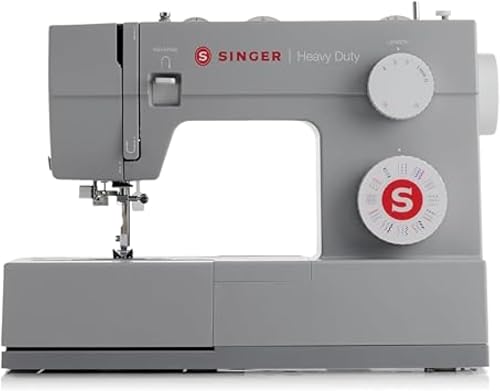
The Singer 4423 suits sewists who want one machine for everyday seams, decorative work and thicker materials. Its 97 stitch applications include basic, stretch and decorative options, and its one-step buttonhole reduces the number of steps for making buttonholes.
The automatic needle threader helps simplify setup. Its top drop-in bobbin has a transparent cover, and adjustable presser-foot pressure gives you another setting to consider when switching between light and thick fabrics.
Singer describes the 4423 for denim, canvas and leather. The extra-high presser-foot lift can help accommodate layered work, while the free arm gives access to narrow pieces such as hems and cuffs.
Choose it if you expect to use a range of stitches and want convenient setup features. Skip it if you only need a few basic stitches and don't expect to use the extra options.
For a first sewing session, our guide to sewing machine basics for beginners covers the first steps.
Brother ST371HD: Best for garment repairs
- 37 built-in stitches
- Automatic needle threader
- Drop-in top bobbin
- Free arm
A free arm, automatic needle threader and six included feet support garment repairs, alterations and other everyday sewing.
Pros
- Six included feet
- Automatic needle threader
- Free arm for cuffs and sleeves
Cons
- Maximum sewing speed is 800 stitches per minute
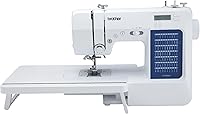
The Brother ST371HD is a strong fit for clothing repairs and alterations, with a free arm for cuffs, sleeves and jeans. It has 37 built-in stitches, an automatic needle threader and six included feet for tasks such as zippers, blind stitching and buttonholes.
The drop-in top bobbin is designed to resist jamming. The included accessories also include a needle set and bobbins, and Brother describes this model for both thick and lightweight fabrics.
Its stated maximum speed is 800 stitches per minute. Choose it if you'll use the free arm and its included feet for garment work.
Skip it if you often sew long seams and want a higher stated speed. Our guide to sewing machine presser feet explains how common attachments support different tasks.
Singer 4432: Best for long sewing sessions
- 110 stitch applications
- Up to 1,100 stitches per minute
- One-step buttonhole
- Top drop-in bobbin
The 4432 combines 110 stitch applications with a high stated sewing speed for buyers who sew long seams or larger projects.
Pros
- 110 stitch applications
- One-step buttonhole
- Top drop-in bobbin with clear cover
Cons
- Its many applications may be more than a basic mending setup needs
The Singer 4432 is suited to larger projects with long seams, pairing 110 stitch applications with a stated top speed of 1,100 stitches per minute. A one-step buttonhole and reverse lever cover two useful tasks for everyday construction and seam reinforcement.
A clear bobbin cover lets you monitor the thread supply while you sew. Included accessories include general-purpose, zipper, buttonhole and button-sewing feet, along with an edge and quilting guide.
Singer describes the 4432 for denim and canvas. Choose it if you want a wide selection of applications and a high stated speed for long projects.
Skip it if you mainly mend clothes or sew simple seams and won't use many stitch options. For fabric-specific needle guidance, see our sewing machine needle size chart.
Brother FB1757X: Best for first-time sewists

- 17 built-in stitches
- Four-step buttonhole
- Reverse button
- Free arm
A smaller stitch selection and straightforward controls make this Brother a fit for basic sewing, with a free arm for cuffs and other small pieces.
Pros
- 17 built-in stitches
- Free arm
- LED work area lighting
Cons
- Buttonhole uses a four-step style
The Brother FB1757X fits basic sewing when a smaller set of choices feels easier to manage. It offers 17 built-in stitches, a reverse button, a free arm and LED lighting over the work area.
This machine uses a four-step buttonhole process, which takes more steps than a one-step buttonhole. It also includes an extension table, which can support larger pieces while you sew.
Choose this Brother if you want a straightforward stitch selection for garments and accessories. Its free arm helps when sewing cuffs and sleeves.
Skip it if making buttonholes often and minimizing setup steps are priorities.
Singer 4411: Best for a pink sewing space

- 11 built-in stitches
- 69 stitch applications
- Up to 1,100 stitches per minute
- Pink finish
This pink Singer offers 69 stitch applications and a stated 1,100 stitches per minute for buyers who want a bold color and heavy-fabric features.
Pros
- Pink finish
- 69 stitch applications
- Up to 1,100 stitches per minute
Cons
- Fewer stitch applications than the Singer 4432
The Singer 4411 stands out for its pink finish and features for thicker materials. Its 69 stitch applications include essential, decorative and stretch options, and its stated speed reaches 1,100 stitches per minute.
Singer says its motor provides 60% more power than standard models and describes the machine for denim, canvas and leather. Its accessory kit includes four presser feet, a quilting guide, bobbins and a soft cover.
Choose it if you want a fast machine with a moderate range of applications and like the pink finish. Skip it if your main priority is the widest choice of stitches, since the Singer 4432 offers more applications.
Singer 4511: Best for controlled stitching

- 11 built-in stitches
- Speed control
- Up to 1,000 stitches per minute
- Adjustable stitch length and width
Speed control lets you set the maximum sewing speed, which can help when you want more control on curves and detailed sections.
Pros
- Speed control
- Adjustable stitch length and width
- Full metal interior frame
Cons
- Four-step buttonhole
The Singer 4511 is the pick here for maximum speed control. You can set a maximum sewing speed, which helps you work more deliberately on curves, corners and detailed sections.
Its 11 built-in stitches deliver 69 applications. Adjustable stitch length and width give you options for different fabrics and techniques.
It also has a clear bobbin cover, free arm and four-step buttonhole. Singer describes its DC motor and full metal frame as features for thicker fabrics and steady sewing.
Choose it if you want to cap the speed for more controlled sewing. Skip it if you want a one-step buttonhole; the Singer 4423 and Janome 1522-BG offer that option.
Janome 1522-BG: Best for roomy work space

- 22 built-in stitches
- One-step buttonhole
- Extra-wide sewing bed
- Built-in needle threader
The extra-wide sewing bed and 22 built-in stitches suit buyers who want more work space and a visible stitch reference chart.
Pros
- Extra-wide sewing bed
- Built-in needle threader
- Three presser-foot pressure settings
Cons
- Wider footprint than the other listed machines
The Janome 1522-BG suits sewists who want more room around the needle, with an extra-wide sewing bed and an open-top accessory compartment. Its 22 built-in stitches cover utility, stretch, quilting and decorative options, plus a one-step buttonhole.
A built-in needle threader, drop feed and three presser-foot pressure settings add useful controls. A quick reference chart shows the stitch choices, while markings on the needle plate can help you guide seam placement.
Choose this machine if extra workspace and adjustable presser-foot pressure matter to you. Skip it if table space is tight: at 17.5 in wide, it has a wider footprint than the 15.5 in wide machines in this group.
How do you choose the best mechanical sewing machine?
Choose the best mechanical sewing machine by matching its controls and features to the work you plan to do most. Stitch count matters less than having the stitches, buttonhole style and attachments that you'll use.
What features matter in the best mechanical sewing machine?
For frequent setup, a needle threader and an easy-to-check bobbin can make routine steps simpler. The Singer 4423, Brother ST371HD and Janome 1522-BG include a needle threader, while the Singer 4423 and 4432 have a clear bobbin cover.
For garment work, check whether the machine has a free arm and which presser feet come with it. A free arm makes it easier to sew around narrow areas such as cuffs and hems.
Before sewing, learn the correct sequence for winding and placing the bobbin with our guide to winding a sewing machine bobbin.
How many stitches do you need?
A smaller stitch set can be enough for straight seams, hems and simple repairs. The Brother FB1757X has 17 built-in stitches, while the Singer 4432 offers 110 stitch applications for buyers who want more options.
Compare the types of stitches, not just the count. Stretch stitches help with stretchy fabrics, decorative stitches add detail, and buttonhole styles differ: some machines complete the task in one step, while others use four.
Can a mechanical sewing machine handle thick fabric?
Some mechanical machines have features intended for denim or layered fabric, but the needle, number of layers and setup still matter. Singer describes several Heavy Duty models in this group for thicker materials, and Brother describes the ST371HD for both thick and lightweight fabrics.
Use a needle suitable for the fabric and thread, and follow the machine manual. If you plan to sew denim, canvas or upholstery fabric often, compare the details in our guide to sewing machines for thick fabric.
How should you set up a mechanical sewing machine?
Set up a mechanical sewing machine on a stable, level surface with enough room to support the fabric. Keep the instruction manual nearby, since threading paths, bobbin placement and controls vary between models.
Before sewing, wind and insert the bobbin, thread the upper path and bring the bobbin thread up through the needle plate. Raise the presser foot while threading where the manual directs.
Then check that the thread is seated in the tension path. A correctly threaded machine is less likely to form loose loops or uneven stitches.
Start with a scrap of the same fabric and thread as your project. Sew a short line and inspect both sides.
Adjust the stitch length or tension only if the manual or the fabric calls for it. This small check can catch a threading problem before it affects a garment or larger piece.
What common sewing machine mistakes should you avoid?
The most common setup mistakes are using the wrong needle, threading with the presser foot down when the manual calls for it to be raised, and sewing before checking the bobbin. If stitches look uneven, stop and rethread both paths before turning the tension dial.
Avoid pulling fabric from behind the presser foot, since the feed dogs are meant to move it through at a steady pace. Guide the fabric lightly, use the reverse control to secure seam ends, and keep pins away from the needle's path.
Don't assume a machine can sew every thick stack just because it has a heavy-duty label. Test the seam on a scrap and use a suitable needle.
Reduce speed if you need more control. For regular care, remove lint from the bobbin area as directed in the manual and replace bent or dull needles.
Which mechanical sewing machine should you choose?
Choose the Singer 4423 if you want a wide choice of stitch applications and convenient threading. Pick the Brother ST371HD for garment repairs, the Brother FB1757X for a simpler stitch set, the Janome 1522-BG for a wider bed or the Singer 4511 if speed control matters most.
If you want to compare more beginner-friendly options, browse our starter sewing machine picks. For more help choosing a machine that fits your projects and space, read what to look for when buying a sewing machine.
Our top 3 picks at a glance
-
1
-
2
-
3
Frequently asked questions
What is a mechanical sewing machine?
A mechanical sewing machine uses physical controls such as dials, levers and buttons to choose stitches and adjust settings. Models vary in stitch choices and conveniences, such as needle threaders, bobbin systems and free arms.
Before you choose one, consider which controls feel clear to you and which features match your regular projects.
Are mechanical sewing machines good for beginners?
Yes. A mechanical machine can suit a beginner who wants direct controls and a manageable set of stitches.
The Brother FB1757X has 17 built-in stitches, while the Singer 4423 adds an automatic needle threader and a broader selection of stitch applications.
Compare setup steps and included feet, too.
Can a mechanical sewing machine sew denim?
Some mechanical machines include features for thicker fabrics, but your needle, fabric layers and machine setup also matter. Singer describes its 4423, 4432, 4411 and 4511 for denim, while Brother describes the ST371HD for thick fabrics.
Use an appropriate needle and follow the machine manual for your fabric.
What should I compare when choosing a mechanical sewing machine?
Compare stitch options, buttonhole steps, threading, bobbin style, free-arm access and the fabrics you plan to sew. The Singer 4423 has an automatic needle threader and one-step buttonhole, while the Brother FB1757X uses a four-step buttonhole.
Start with the features you expect to use most, then check the machine's size and included feet.