8 Best Sewing Machines for Thick Fabric (October 2026)
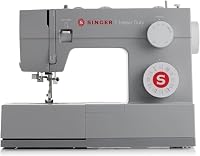
The best sewing machines for thick fabric include the Singer 4452 for denim and canvas, the Brother ST150HDH for controlled bulky sewing, and the Singer 6380 for large home projects.
On this page (9 sections)
- How we chose sewing machines for thick fabric
- Which sewing machine for thick fabric fits your project?
- How do you choose a sewing machine for thick fabric?
- What should you set up before sewing thick fabric?
- Is a walking foot useful for thick fabric?
- How should you sew across thick seam crossings?
- What mistakes make thick fabric harder to sew?
- How do you care for a machine used with thick fabric?
- Which sewing machine for thick fabric should you choose?
The Singer 4452 is the best sewing machine for thick fabric for most sewists, with a stronger motor, walking foot and heavy-duty needles included. For speed control and more room beside the needle, consider the Brother ST150HDH.
A sewing machine for thick fabric needs to do more than carry a heavy-duty label. The needle must suit the material, the presser foot needs room over bulky seams, and the feed needs to move layers without you forcing them.
These machines suit different kinds of work: denim hems, canvas bags, upholstery repairs, quilts and everyday clothes. If you mostly sew garments, see our guide to sewing machines for making clothes.
For a basic machine comparison, read heavy-duty vs regular sewing machines.
Our picks at a glance
-
1

-
2

-
3

How we chose sewing machines for thick fabric
We compared the features that matter most when sewing thick or layered materials: motor and feed design, included feet and needles, stated fabric capacity, presser-foot controls and workspace. The scores reflect how well each machine’s stated features fit common thick-fabric jobs.
A walking foot can help move several layers together, while adjustable presser-foot pressure gives you another way to adapt the feed to different materials. We also considered useful accessories and project support, such as an extension table or a clear space beside the needle.
No home machine makes every bulky seam easy. Material, needle, thread, stitch choice and seam construction all affect how smoothly a project goes, so plan to make a sample from matching scraps before sewing the finished item.
| Product | Best for | Stitch options | Frame | Included foot | Our score |
|---|---|---|---|---|---|
| Singer 4452 | denim and canvas | 32 stitches, 110 applications | Full metal | Walking foot | 8.2 |
| Brother ST150HDH | controlled bulky sewing | 50 built-in stitches | Walking foot | 7.7 | |
| Singer 6380 | large home projects | 32 stitches, 110 applications | Heavy-duty metal | 7.6 | |
| Brother ST531HD | denim layers | 53 built-in stitches | Metal | 7.5 | |
| Singer Heavy Duty 500 Classic | adjustable stitching | 110 stitch applications | Full metal | 7.3 | |
| Janome HD3000 | simple mechanical controls | 18 built-in stitches | 7.2 | ||
| Janome HD1000 | a metal-frame mechanical machine | 14 built-in stitches | 6.9 | ||
| Singer 4532 | speed adjustment | 32 stitches, 110 applications | Full metal interior | 6.7 |
Which sewing machine for thick fabric fits your project?
The Singer 4452 is the strongest general fit here because it combines a stronger motor, walking foot and heavy-duty needles. The other choices make sense when you value speed control, a large work surface, a stated denim capacity or simpler mechanical controls.
Singer 4452: Best for denim and canvas
- Stronger motor for multiple layers and thicker fabrics
- 32 built-in stitches and 110 applications
- Walking foot and clearance plate included
A stronger motor and included walking foot make the 4452 a well-equipped choice for thicker layers. Its accessory kit also includes a clearance plate and heavy-duty needles.
Pros
- Walking foot and clearance plate included
- Heavy-duty needles included
- Adjustable presser foot pressure
Cons
- Fewer built-in stitches than the Brother ST150HDH
- No extension table included
The Singer 4452 suits denim hems, canvas bags and home decor with several layers. Its stronger motor is designed to provide more piercing power, and its full metal frame adds stability.
The walking foot can help when the upper and lower layers tend to shift. A clearance plate and heavy-duty needles are also included, giving you useful options for bulky transitions and tougher materials.
It offers a range of stitch applications, including basic, stretch and decorative stitches, plus a one-step buttonhole. Adjustable presser-foot pressure is useful if you also sew lightweight fabrics.
Choose it if you want a broad heavy-duty accessory kit for varied projects. Skip it if an extension table is central to your work, since one is not included.
Brother ST150HDH: Best for controlled bulky sewing
- 50 built-in stitches
- Variable speed control
- Walking foot and 6.4 x 4.1 in needle-to-arm workspace
Speed control and a walking foot help manage difficult fabrics and multiple layers. Its expanded workspace gives bulky projects more room beside the needle.
Pros
- Variable speed control
- Walking foot included
- Large needle-to-arm workspace
Cons
- Intended for use at 120 volts in the US
- More stitch options may be unnecessary for basic repairs
The Brother ST150HDH suits sewists who want control over sewing speed and fabric handling. Variable speed control, start/stop and needle up/down buttons can help you work carefully around corners, pivots and bulky seams.
Its walking foot holds fabric between its upper feed dog and the machine’s lower feed dogs. Brother describes a longer 7-point feed dog design intended to improve feeding on tough projects.
The 6.4 x 4.1 in needle-to-arm workspace gives quilts and bulky projects more room beside the needle. It also has 50 built-in stitches, five auto-size buttonholes and an LCD screen that shows stitch selection and the recommended presser foot.
Pick it for projects that combine thick fabric with detailed turns or large pieces. Skip it if you sew outside the US, since this model is intended for use at 120 volts in the US.
Singer 6380: Best for large home projects
- Extension table included
- 32 stitches and 110 applications
- 50% stronger motor than standard sewing machines
The extension table gives larger projects a level sewing surface, while the stronger motor is designed for heavy fabrics. Adjustable presser foot pressure also supports lightweight sheers.
Pros
- Extension table included
- Non-stick foot and heavy-duty needles included
- Adjustable presser foot pressure
Cons
- Extension table takes storage space
- No walking foot included
The Singer 6380 fits large home projects that need a level surface as the fabric passes beside the needle. Its extension table supports larger work, and adjustable presser-foot pressure helps when switching between heavier material and lightweight sheers.
The machine has a heavy-duty metal frame and stainless steel bedplate. Its motor is described as 50% stronger than standard sewing machines, and the stitch selection includes basic, decorative and stretch options.
The accessory kit includes heavy-duty needles, a non-stick foot and several other feet. Choose it if you need an extension table and a range of included accessories.
Skip it if you expect to sew many layers that shift, since a walking foot is not included. The 4452 and ST150HDH are better fits when that foot is a priority.
Brother ST531HD: Best for denim layers

- Designed to sew up to 6 layers of denim
- 53 built-in stitches
- Spring-action zigzag foot included
The ST531HD is designed to sew up to six denim layers, and its spring-action zigzag foot glides over changes in fabric thickness. It also includes a non-stick foot and heavy-duty needles.
Pros
- Six denim layers stated
- Metal needle plate
- Non-stick foot included
Cons
- Intended for use at 120 volts in the US
- No walking foot included
The Brother ST531HD suits projects with several denim layers. It is designed to handle up to six layers, and its spring-action zigzag foot is meant to glide over changes in fabric thickness.
A metal frame and metal needle plate support the machine’s construction and fabric feeding. It also has a built-in needle threader, a jam-resistant drop-in bobbin and a one-step auto-size buttonhole.
The 53 built-in stitches include everyday, blind hem, decorative and zigzag options. Six included feet cover common tasks such as zippers, buttonholes and non-stick sewing.
Choose this machine if denim layers are a regular part of your work. Skip it if you want an included walking foot, since the accessory set does not include one.
Singer Heavy Duty 500 Classic: Best for adjustable stitching

- 50% more power than standard models
- Adjustable stitch length, width and needle position
- Full metal frame
This mechanical machine offers adjustable stitch settings and needle position for different sewing tasks. Its stronger motor and full metal frame suit sewists considering thicker fabric and layered projects.
Pros
- Adjustable stitch settings
- Full metal frame
- Drop feed included
Cons
- Vintage-inspired styling may not suit every sewing space
- No walking foot included
The Singer Heavy Duty 500 Classic suits sewists who want adjustable settings in a mechanical machine. Stitch length, stitch width and needle position can be adjusted for different techniques and fabric handling.
Singer describes the motor as providing 50% more power than standard models for heavy fabrics such as denim and canvas. The full metal frame is intended to provide stability, and drop feed supports free-motion work.
Included feet cover all-purpose sewing, zippers, buttonholes, blind hems and satin stitching. The machine also has a one-step buttonhole and built-in needle threader.
Choose it if you value manual adjustments and vintage-inspired styling. Skip it if a walking foot is essential to your layered work, since one is not included.
Janome HD3000: Best for simple mechanical controls

- Foot pressure adjustment
- Extra-high presser foot lift
- Built-in needle threader
Foot pressure adjustment and an extra-high presser foot lift offer useful controls for different fabric thicknesses. The mechanical design keeps stitch selection straightforward.
Pros
- Foot pressure adjustment
- Extra-high presser foot lift
- Carrying case included
Cons
- No walking foot included
- Fewer stitch options than the electronic Brother picks
The Janome HD3000 is a mechanical option for sewists who value simple controls and pressure adjustment. Foot-pressure adjustment and an extra-high presser-foot lift help accommodate different fabric thicknesses.
It has 18 built-in stitches, a one-step buttonhole and a built-in needle threader. Snap-on presser feet and a carrying case are included.
Choose it for straightforward mechanical stitch selection and its pressure adjustment. Skip it if you expect a walking foot to be in the box, or if you need a machine with a larger stitch selection.
Janome HD1000: Best for a metal-frame mechanical machine

- Cast aluminum body
- 14 built-in stitches
- Free arm and drop feed
The cast aluminum body and mechanical stitch controls suit buyers who prefer a simpler machine. It also has a free arm and drop feed for cuffs, darning and free-motion work.
Pros
- Cast aluminum body
- Automatic needle threader
- Free arm and drop feed
Cons
- Four-step buttonhole
- No walking foot included
The Janome HD1000 suits buyers who want a cast-aluminum mechanical machine with a short list of stitch choices. Its free arm gives access to cuffs, pants and collars, while drop feed supports darning and other free-motion work.
The included accessories cover common sewing tasks, including zipper and buttonhole feet, bobbins and a hem guide. An automatic needle threader is also included.
Its four-step buttonhole takes more steps than the one-step versions on several other picks. Choose it for a simple mechanical layout, but skip it if layered work makes an included walking foot a priority.
Singer 4532: Best for speed adjustment

- New DC motor
- Speed control
- 32 stitches and 110 applications
Speed control helps set a maximum sewing pace for detailed sections. The DC motor, adjustable presser foot pressure and metal frame are designed for a range of fabric weights.
Pros
- Speed control
- Adjustable presser foot pressure
- Stainless steel bedplate
Cons
- No walking foot included
- Fewer included feet than some picks
The Singer 4532 suits sewists who want speed adjustment for detailed work. You can set a maximum sewing speed, which can help you work carefully around curves and bulky turns.
It has 32 built-in stitches that deliver 110 applications, a full metal interior frame and a stainless steel bedplate. The adjustable presser-foot pressure, free arm and one-step buttonhole support a mix of fabric weights and everyday tasks.
The machine sews at up to 1,000 stitches per minute. Its accessories cover basic sewing and repairs, but do not include a walking foot.
Choose it if adjustable speed matters and you sew a range of fabric weights. Skip it if your projects often involve several shifting layers and you want a walking foot included.
How do you choose a sewing machine for thick fabric?
Start with the hardest material and seam in your regular projects, then match the machine’s features to that job. Occasional denim hems need a different setup from repeated canvas work or thick quilt intersections.
For layers that shift, an included walking foot is useful. For bigger pieces, look for room beside the needle or an extension table; for careful turns, speed control can help you keep a steady pace.
A machine’s listed capacity is also worth reading in context. The ST531HD is designed for up to six denim layers, but that does not mean every six-layer seam will feed easily: folds and seam crossings can make the same fabric much thicker in one spot.
Think about how often you’ll sew light materials too. The Singer 4452 and 6380 offer adjustable presser-foot pressure, which is useful when your projects range from heavier material to sheers.
What should you set up before sewing thick fabric?
Use a needle, thread, presser foot and stitch suited to the material, then sew a sample with the same number of layers as the project. A scrap test helps you catch skipped stitches, poor feeding or unsuitable tension before the finished piece is under the needle.
Start with the needle. Use a heavy-duty needle for denim or canvas when appropriate, and choose a needle made for stretch fabric when sewing knits.
A clean work area and correctly threaded machine help reduce avoidable feeding and stitch problems. Follow the manual for threading, bobbin placement, foot changes and routine cleaning, especially before changing to a specialty foot.
For needle choices, see our sewing machine needle size chart. If you are new to machine setup, our first-day sewing machine guide walks through the basics.
Is a walking foot useful for thick fabric?
A walking foot can help keep layers feeding together because it moves the upper fabric while the machine’s feed dogs move the lower fabric. That can help with quilts, canvas projects and seams where the layers tend to creep apart.
The Singer 4452 and Brother ST150HDH include a walking foot. Check the manual before attaching specialty feet, and confirm that your needle, thread and stitch suit the material.
A walking foot does not make every thick seam easy. If fabric bunches or a seam becomes hard to move, stop and reassess the bulk and setup instead of pulling the material through.
How should you sew across thick seam crossings?
Approach thick crossings slowly and keep the fabric level as it reaches the needle. A clearance plate can help keep the presser foot level when one side of a seam is much higher than the other.
Don’t pull fabric from behind the machine or push it toward the needle. Let the feed dogs move it; pulling can bend the needle and affect stitch formation.
If the machine skips stitches, the needle bends or the motor strains, stop. Check that the needle is suitable and correctly installed, the thread is appropriate, the foot is attached as intended and the seam is not too bulky for the setup.
Trim and grade seam allowances where the pattern and fabric allow it. Reducing excess layers at bulky joins can make them easier to feed without changing the main construction.
What mistakes make thick fabric harder to sew?
The most common avoidable problems are using the wrong needle, rushing through a bulky crossing and forcing the fabric. Each can lead to poor feeding or stitch problems that seem like a machine limitation.
A universal needle may not suit every heavy material, while a needle that is bent or dull can struggle to form stitches cleanly. Match the needle to the fabric and thread, and replace it if it bends or becomes dull.
Another mistake is sewing the final seam before checking the setup on scraps. The same fabric can behave differently at a flat section and where several seams meet, so include both in your sample.
Avoid changing several settings at once when a sample looks wrong. Check threading and needle first, then adjust one setting at a time according to the manual so you can see which change helps.
How do you care for a machine used with thick fabric?
Keep the machine clean and follow the manual’s maintenance steps, especially after sewing material that sheds lint. Lint around the bobbin area can interfere with smooth operation, and each model may have different cleaning instructions.
Use the correct needle and don’t keep sewing with one that bends or becomes dull. Store specialty feet and needles together so the right setup is easy to find for the next project.
When a machine begins to make unusual sounds, skip stitches or feed unevenly, stop and check the basic setup before continuing. Re-threading, replacing the needle or clearing lint may resolve a simple issue; use the manual or brand support if the cause remains unclear.
Which sewing machine for thick fabric should you choose?
Choose the Singer 4452 for a broad kit that includes a walking foot and heavy-duty needles. Pick the Brother ST150HDH for speed control and extra workspace, or the Brother ST531HD if denim layers are the main reason you’re shopping.
For large home projects, the Singer 6380 adds an extension table. If you prefer mechanical settings, consider the Janome HD3000 for foot-pressure adjustment or the Singer Heavy Duty 500 Classic for adjustable stitch and needle positions.
If your projects mostly use light and medium fabrics, compare these features with the everyday options in our guide to the best sewing machine for your home. For an overview of common machine styles, see types of sewing machines and what each one does.
Our top 3 picks at a glance
-
1
-
2
-
3
Frequently asked questions
What sewing machine feature helps with thick fabric?
A strong motor, suitable presser foot clearance and a walking foot can help with thick fabric. The walking foot moves the top layer along with the machine's feed dogs, which can help keep layers aligned.
Choose a needle suited to the material, and sew a sample using the same layers as your project.
Can a home sewing machine sew denim?
Yes, some home machines are designed for denim. The Brother ST531HD is specified for up to six denim layers, while the Singer 4452 includes heavy-duty needles and a walking foot.
Thick seam crossings can still be demanding, so guide fabric gently and let the machine feed it.
Do I need a walking foot for thick fabric?
A walking foot can help feed several layers evenly by moving fabric from above as the feed dogs move it below. It can help with quilts, canvas and layers that tend to shift.
It isn't needed for every project, and several machines in this roundup don't include one.
What needle should I use for thick fabric?
Use a needle suited to the fabric, such as a heavy-duty needle for denim or canvas, and match its size to the material and thread. Replace a bent or dull needle before sewing bulky seams.
See our sewing machine needle size chart for help choosing a needle.
Should I buy a heavy-duty or regular sewing machine?
Choose a heavy-duty model if you often sew denim, canvas or several layers, and a regular machine if most projects use light or medium fabrics. Your choice also depends on features such as speed control, a walking foot or adjustable foot pressure.
Our heavy-duty vs regular sewing machine guide explains the tradeoffs.