7 Best Easy-to-Use Sewing Machines (October 2026)
The best easy-to-use sewing machines include the Brother CS7000X for clear computerized setup, the Brother HC1850 for guided stitch choices, and the Singer 4523 for speed control.
On this page (5 sections)
The easiest sewing machine to use for most beginners is the Brother CS7000X, with an automatic needle threader, drop-in bobbin and LCD stitch selection. If you prefer mechanical controls, look at the Janome Arctic Crystal; for adjustable speed, consider the Singer 4523.
Setup and control matter more than a long feature list when you're learning. We compared threading aids, bobbin loading, stitch selection and speed controls to find machines that can make those first steps clearer.
Our picks at a glance
-
1
-
2

-
3

Which easy-to-use sewing machine suits your first projects?
The Brother CS7000X is the most balanced choice for a first machine because it combines guided stitch selection with simpler threading and bobbin loading. Other picks suit beginners who prefer mechanical settings, speed control or a wider range of stitches.
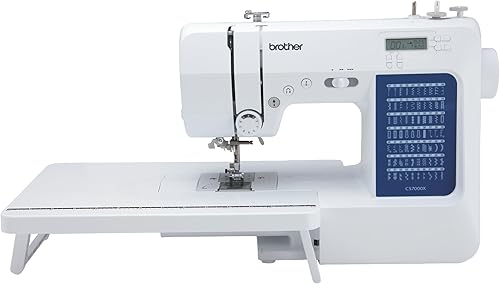
Brother CS7000X: Best for clear computerized setup
- Automatic needle threader
- Jam-resistant drop-in top bobbin
- LCD display
- 70 built-in stitches
An automatic needle threader and drop-in bobbin simplify setup, while the LCD display helps you select from 70 built-in stitches.
Pros
- Automatic needle threader
- Drop-in bobbin
- LCD stitch selection
Cons
- More stitch choices than some beginners need
- Made for 120-volt use in the US
The CS7000X supports a beginner through the early setup steps. Its automatic needle threader pushes thread through the needle, and its jam-resistant drop-in top bobbin is designed to load easily and stay in place.
The LCD display helps you select among 70 built-in stitches. That range includes utility, decorative, heirloom and quilting stitches, plus 7 one-step auto-size buttonholes.
The machine includes a wide table, 10 sewing feet and a quilt guide. Those extras give you room to explore projects beyond basic seams, though you can start with a straight stitch and add options as you learn.
Choose it if you want computerized stitch selection and setup aids in one machine. It is intended for 120-volt use in the US, so check electrical compatibility if you'll use it elsewhere.
Brother HC1850: Best for guided stitch choices
- Advanced needle threader
- Drop-in top bobbin
- LCD screen
- Stitch reference flip-chart
The stitch reference flip-chart, LCD and push-button selector help you browse a large stitch selection. Its automatic threading function and drop-in bobbin also simplify setup.
Pros
- Stitch reference flip-chart
- Automatic threading function
- Adjustable sewing speed
Cons
- Large number of stitches may take time to learn
- Made for 120-volt use in the US
The HC1850 gives you a stitch reference flip-chart and LCD screen with a push-button selector. These can help you identify and choose among 185 built-in stitches, including 55 alphanumeric stitches.
An advanced needle threader pushes thread through the needle with a lever, while the drop-in bobbin is designed to resist jams. Adjustable sewing speed can also help you work at a pace that feels manageable as you practice.
This model includes a wide table and 8 presser feet. Its wide range of stitch options can be useful as your projects grow, though beginners who only want straight seams may prefer fewer choices.
Choose it if you want a computerized machine with a visual stitch reference. Like the CS7000X, it's made for 120-volt use in the US.
Singer 4523: Best for speed control
- Integrated needle threader
- Top drop-in bobbin
- Speed control
- 23 built-in stitches
Speed control lets you set a maximum sewing speed, which can help beginners keep more control on curves and detailed sections. The integrated threader and drop-in bobbin reduce setup steps.
Pros
- Adjustable maximum sewing speed
- Integrated needle threader
- One-step buttonhole
Cons
- Mechanical stitch selection may require practice
- 1-year manufacturer warranty
The Singer 4523 gives you control over maximum sewing speed, a useful feature when you're learning to guide fabric around curves or corners. It also has an integrated needle threader and top drop-in bobbin to simplify setup.
Its 23 built-in stitches cover utility, stretch and decorative work, with adjustable stitch length and width. A one-step buttonhole handles that task in one sequence, and the free arm gives access to cuffs, hems and other small areas.
This mechanical machine has fewer stitch options than the computerized Brothers here. Choose it if you like adjusting dials and want to set a lower speed limit while you build control.
Janome Arctic Crystal: Best for simple mechanical controls

- 15 built-in stitches
- Bobbin diagram
- 4-step buttonhole
- Compact, portable design
A compact mechanical machine with 15 stitches and a bobbin diagram keeps the feature set straightforward. It uses a 4-step buttonhole rather than a one-step style.
Pros
- 15 built-in stitches
- Bobbin diagram
- Compact and portable
Cons
- Buttonhole takes 4 steps
- No automatic needle threader specified
The Arctic Crystal suits beginners who want simple mechanical controls and a modest set of 15 built-in stitches. Janome includes a bobbin diagram to help with setup, and the compact machine weighs 12 lb.
It handles everyday sewing, clothing repairs, patchwork and light quilting. The 4-step buttonhole takes more steps than the one-step options on the Brother and Singer machines here.
There is no automatic needle threader specified for this model. Choose it if you value basic stitch choices and a compact design more than an automated threading aid.
Singer 4552: Best for a wider stitch selection

- Integrated needle threader
- Top drop-in bobbin
- Speed control
- 32 built-in stitches
This mechanical option pairs speed control and an integrated needle threader with 32 built-in stitches. It suits beginners who want room to explore more stitch options.
Pros
- Adjustable maximum sewing speed
- Integrated needle threader
- One-step buttonhole
Cons
- More stitch options to learn
- 1-year manufacturer warranty
The Singer 4552 pairs an integrated needle threader and top drop-in bobbin with speed control. That mix can help a beginner manage setup and slow down for smaller, more detailed sections.
It has 32 built-in stitches, adjustable stitch length and width, and a one-step buttonhole. The wider stitch range gives you more options than the Singer 4523, but it also gives you more settings to learn.
The included accessories include 2 bonus presser feet, an even-feed walking foot and a non-stick foot. Choose it if those extras and its broader stitch selection fit projects you expect to try.
Janome MOD-30: Best for button controls

- One-hand needle threader
- Top-loading bobbin with clear cover
- Start/stop button
- Backlit LCD
A one-hand needle threader and backlit LCD support setup and stitch selection. Convenience buttons include start/stop, reverse, locking stitch and needle up/down.
Pros
- One-hand needle threader
- Start/stop button
- Clear bobbin cover
Cons
- 30 built-in stitches may be more than needed for basic repairs
- Included components specify a zigzag foot
The Janome MOD-30 uses a one-hand needle threader and a top-loading bobbin with a clear cover. Its backlit LCD and navigation keys help with stitch selection, while start/stop, reverse and needle up/down buttons add control options.
It has 30 built-in stitches and 3 one-step buttonholes. The convenience buttons may appeal if you want functions beyond a basic foot pedal, but they add controls to learn.
Choose the MOD-30 if you want those buttons and a computerized display. For simpler mechanical controls, the Arctic Crystal has fewer stitches and fewer settings to sort through.
Janome MOD-15: Best for basic everyday sewing

- 15 built-in stitches
- Easy threading with automatic tension
- Top-loading bobbin with clear cover
- Adjustable stitch length and zigzag width
The MOD-15 keeps the stitch selection to 15 built-in stitches and offers a top-loading bobbin with a clear cover. It's a straightforward option for basic sewing and repairs.
Pros
- 15 built-in stitches
- Automatic tension
- Free arm
Cons
- Four-step buttonhole
- No automatic needle threader specified
The Janome MOD-15 keeps its selection to 15 built-in stitches and has easy threading with automatic tension. Its top-loading bobbin has a clear cover, and stitch length and zigzag width are adjustable.
It includes a free arm for cuffs and hems, plus drop feed for free-motion sewing. The four-step buttonhole involves more steps than a one-step buttonhole, and no automatic needle threader is specified.
Choose it for basic everyday sewing if you prefer a compact mechanical setup and don't need an LCD. Beginners who find threading the needle difficult may prefer one of the models with a specified needle threader.
What makes a sewing machine easier to learn?
A sewing machine is easier to learn when threading, bobbin loading and stitch selection are clear, and its speed is manageable. Decide which of those steps is hardest for you, then use that to narrow the choices.
An automatic needle threader can reduce the effort of guiding thread through a small needle eye. It doesn't replace learning the full upper-thread path, so keep the manual nearby while you set up the machine.
A top-loading bobbin with a clear cover lets you see thread remaining on some models. Follow each machine's bobbin diagram or manual, since the loading path differs by model.
For a first-day overview, read how to use a sewing machine. It covers basic setup and operation before you move on to a project.
Should a beginner choose mechanical or computerized controls?
Choose mechanical controls if you want a shorter list of settings, or computerized controls if a display and button selection make stitches easier to identify. Neither type removes the need to learn threading, stitch choice and fabric handling.
The Janome Arctic Crystal and MOD-15 offer 15 stitches with mechanical controls. The Brothers add LCD stitch selection and a larger stitch range, while the MOD-30 combines a display with one-hand threading and convenience buttons.
For simple repairs, a smaller stitch set may be enough. If decorative stitching or quilting is on your list, a broader set of options can give you more choices without changing machines.
See our beginner sewing machine guide for more on matching controls and features to your first projects. If Brother is on your shortlist, compare options in our Brother machines for beginners guide.
Which beginner-friendly features matter most?
The most useful beginner features are the ones that address a specific task you expect to do. A needle threader helps with setup, speed control helps with pacing, and a free arm helps with small, rounded items.
Needle threader: The CS7000X, HC1850, Singer 4523, Singer 4552 and MOD-30 specify needle threading aids. The Arctic Crystal and MOD-15 don't specify an automatic needle threader.
Bobbin access: Each model here has a top-loading bobbin. The MOD-30 and MOD-15 specify a clear cover, while the Brother and Singer descriptions call out drop-in bobbins.
Speed control: The HC1850 offers adjustable sewing speeds. The Singer 4523 and 4552 let you set a maximum speed, which can help when you want a slower pace for detailed work.
Free arm: A free arm helps sew around cuffs, hems and other small areas. The Singer models and Janome machines here include one or describe free-arm access.
If needle threading is the main sticking point, see our guide to sewing machines with automatic needle threaders. For another view of entry-level models, read our guide to beginner Singer sewing machines.
How should you choose an easy sewing machine?
Choose the machine that makes your first project feel straightforward: prioritize threading help if setup is your concern, fewer settings if you want simplicity, or speed control if you want to sew at a slower pace.
The Brother CS7000X is a strong fit if you want an LCD, automatic needle threader and drop-in bobbin. Pick the Janome Arctic Crystal for simple mechanical controls, or the Singer 4523 if adjustable maximum speed matters more.
Before deciding, think about what you'll sew first and how much space you have to store the machine. Our guide to choosing a sewing machine for your home can help you compare those needs with other features.
Our top 3 picks at a glance
-
1
-
2
-
3


