7 Best Sewing Machines for Making Clothes (October 2026)
The best sewing machines for making clothes include the Brother XR9550 for varied wardrobes, the Brother CP100X for garment quilters, and the Janome JW8100 for layered seams.
On this page (9 sections)
- Which sewing machine for clothes suits each sewist?
- How do you choose the best sewing machine for clothes?
- Which machine should you choose for denim or knits?
- How should you set up a sewing machine for clothes?
- Which stitches and feet help with garment sewing?
- What common mistakes should you avoid when sewing clothes?
- How do you compare buttonholes, stitches and feet?
- How should you care for a sewing machine used for clothes?
- Which sewing machine for clothes should you pick?
The Brother XR9550 is the best sewing machine for clothes for most home sewists, with garment-friendly stitches, buttonhole styles, an automatic needle threader and useful presser feet. The Janome JW8100 is a good fit for layered seams, while the Singer Heavy Duty models suit frequent denim and other thick-fabric projects.
Your choice depends on the clothes you plan to make. A cotton shirt, stretch leggings and a lined denim jacket call for different stitch choices, needles and fabric handling, so start with your usual projects rather than the largest stitch count.
For a broad overview, read our guide to choosing the best sewing machine for your home. If this is your first machine, compare these picks with our beginner sewing machine options.
Our picks at a glance
-
1

-
2

-
3

Which sewing machine for clothes suits each sewist?
The Brother XR9550 is the strongest all-around choice here for garment variety, while the other picks serve narrower needs. Match the machine to your usual fabrics, closures and finishes, then consider extra features only if they support projects you plan to sew.
| Product | Best for | Stitches | Buttonholes | Included feet | Our score |
|---|---|---|---|---|---|
| Brother XR9550 | varied wardrobes | 165 built-in | 8 auto-size styles | 8 | 8.5 |
| Brother CP100X | garment quilters | 100 built-in | 8 auto-size styles | 10 | 7.9 |
| Janome JW8100 | layered seams | 100 built-in | 7 one-step styles | Even feed and quarter-inch feet | 7.7 |
| Brother CS7205 | finish options | 150 built-in | 8 auto-size styles | 11 | 7.5 |
| Singer 6800C | regular denim | 586 applications | 9 one-step styles | 10 | 7.2 |
| Singer 6600C | mixed weights | 100 built-in | One-step style | 6 | 7.1 |
| Singer Quantum Stylist 9960 | custom details | 600 built-in | 13 one-step styles | 13 | 7.0 |
Brother XR9550: Best for varied wardrobes
- 165 built-in stitches
- 8 styles of auto-size buttonholes
- Automatic needle threader
- 8 included presser feet
A broad stitch selection, automatic needle threader and buttonhole styles suit sewists making different kinds of clothes. The LCD screen shows selected stitches and settings.
Pros
- Automatic needle threader
- Wide range of utility and decorative stitches
- Includes zipper and blind stitch feet
Cons
- Designed for 120-volt use in the US
- Large stitch selection may be more than a beginner needs
The XR9550 suits sewists who make a mix of garments and want options beyond basic construction. Its 165 built-in stitches include utility, decorative and heirloom choices, plus 55 alphanumeric sewing stitches.
For everyday clothes, the practical features include an automatic needle threader, a drop-in top bobbin and 8 styles of auto-size buttonholes. The LCD screen shows the selected stitch and settings.
It includes 8 feet, among them zipper, buttonhole, overcasting and blind stitch feet. The free arm helps reach sleeves and cuffs, while the wide table supports larger pieces of fabric.
Choose it for a varied wardrobe and garment details. Skip it if you want a simple machine with few choices, or if you sew outside the US and need a machine rated for a different voltage.
Brother CP100X: Best for garment quilters
- 100 built-in stitches
- 8 auto-size buttonholes
- 10 sewing feet
- Metal frame
This computerized Brother pairs garment-friendly stitch options with a wide table and a metal frame. It also includes a walking foot and quilting foot for other projects.
Pros
- One-step automatic needle threader
- Includes 10 feet and a quilt guide
- Adjustable sewing speed
Cons
- Designed for 120-volt use in the US
- Included monogramming foot does not mean the machine can monogram
The CP100X is a useful option if garment sewing shares time with quilts and other large projects. It combines 100 utility, decorative and heirloom stitches with 8 auto-size buttonholes, a wide table and a metal frame.
The one-step automatic needle threader and adjustable sewing speed help keep setup and pacing straightforward. The 10 included feet cover tasks such as zippers, button sewing, overcasting and blind stitching.
A walking foot and quilting foot broaden its use beyond clothing, and the hard case helps protect it between projects. The included monogramming foot is for decorative stitches; the machine cannot monogram.
Pick it if you want a garment machine that can also handle quilting. Skip it if you only sew simple clothes and do not need the extra table or quilting accessories.
Janome JW8100: Best for layered seams
- 100 built-in stitches
- 7 one-step buttonholes
- 7-piece feed dog system
- Even feed foot included
The seven-piece feed dog system moves fabric through the machine, and the included even feed foot can help with layers or matching patterns. A free arm is revealed by removing the front drawer.
Pros
- Even feed foot included
- Start/stop button and speed control slider
- Free arm for sleeves and tight spaces
Cons
- Designed for corded electric power
- Its added quilting accessories may go unused for garment-only sewing
The JW8100 is a good choice when you want help controlling layers and matching patterns. Its 7-piece feed dog system moves fabric through the machine, and the included even feed foot is intended for heavy layers and pattern matching.
For garment work, the free arm helps with sleeves and tight spaces. It also has 100 built-in stitches, 7 one-step buttonholes, an LCD screen, a start/stop button and a speed control slider.
The extra-wide extension table and quarter-inch foot are aimed mainly at quilting, but can help if you sew larger pieces alongside clothes. A built-in threader and drop-in bobbin simplify some setup steps.
Choose it if fabric feeding is a priority across varied projects. Skip it if you only make basic garments and would leave its quilting accessories unused.
Brother CS7205: Best for finish options

- 150 built-in stitches
- 8 one-step buttonholes
- 11 sewing feet
- Wide table
The CS7205 includes feet for tasks such as zippers, blind stitching and overcasting. Its LCD screen displays stitch selections.
Pros
- Automatic needle threader
- Includes 11 sewing feet and a quilt guide
- Quick-set drop-in bobbin
Cons
- Designed for 120-volt use in the US
- Wide table takes up extra storage space
The CS7205 suits sewists who want a broad selection of garment finishes ready to use. It comes with 11 feet, including zipper, blind stitch, overcasting and buttonhole feet.
Its 150 built-in stitches include utility, decorative and heirloom options, one alphanumeric font and 8 one-step auto-size buttonholes. The LCD screen, automatic needle threader and quick-set drop-in bobbin cover useful everyday tasks.
A wide table supports larger fabric pieces, and a quilt guide is included for sewists who also make quilts. The table adds storage needs, so check your workspace before choosing it.
Pick it for its included feet and stitch range. Skip it if you need a compact setup or prefer fewer controls and options.
Singer 6800C: Best for regular denim

- 586 stitch applications
- Two lettering fonts
- 10 presser feet
- Heavy-duty metal frame
Singer describes the 6800C as designed for thick fabrics such as denim, canvas and leather. It combines those heavy-duty features with stretch stitches, lettering and an even feed foot.
Pros
- Built-in needle threader and thread cutter
- Includes walking foot and blind hem foot
- Speed control and LCD screen
Cons
- Heavy-duty features may be unnecessary for lightweight garment fabrics
- Soft cover rather than a hard case
The Singer 6800C fits sewists whose clothing projects regularly include denim or thick layers. It is designed for fabrics such as denim, canvas and leather, and its motor is rated for speeds up to 1,100 stitches per minute.
It offers 586 stitch applications, 2 lettering fonts and 9 one-step buttonhole styles. The LCD screen displays stitch images and settings, and its 10 included feet include an even feed foot and blind hem foot.
A built-in needle threader, thread cutter and speed control add convenience. The soft cover protects the machine from dust, but it is not a hard case.
Choose it if thick-fabric sewing is a regular part of your wardrobe projects. Skip it if you mostly sew lightweight fabrics and would not use the heavy-duty features.
Singer 6600C: Best for mixed weights

- 100 built-in stitches
- 215 stitch applications
- Adjustable presser foot pressure
- Stainless steel bedplate
The Singer 6600C is designed for thick projects and has adjustable presser foot pressure for lightweight sheers. The stainless steel bedplate helps fabric move across the machine.
Pros
- Adjustable presser foot pressure
- LCD screen with touch controls
- Extra-high sewing speed
Cons
- Heavy-duty focus may be more than you need for basic garments
- Comes with fewer feet than some picks here
The Singer 6600C suits projects that range from thick fabrics to lightweight sheers. Its adjustable presser foot pressure is a useful feature for this mix, and the stainless steel bedplate helps fabric glide across the machine.
It has 100 built-in stitches that provide 215 stitch applications, with touch controls and an LCD screen showing stitch, length and width. The machine is designed for heavy-duty projects such as denim and canvas, and is described as having extra-high sewing speed.
The 6 included feet cover common tasks such as zippers, buttonholes and blind hems. That is fewer feet than several other picks here, so check which specialty feet your planned garments need.
Consider it if you sew several fabric weights. Skip it if you want many included feet or only make basic garments from light and medium-weight fabric.
Singer Quantum Stylist 9960: Best for custom details
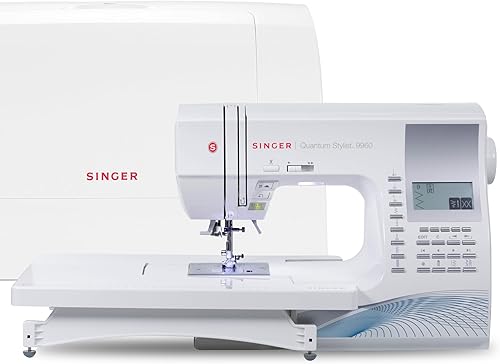
- 600 built-in stitches
- 13 one-step buttonhole styles
- 13 presser feet
- Start/stop button
This Singer offers many stitch applications, buttonhole styles and presser feet for sewists who want options for garment details. Speed control and a start/stop button offer ways to manage your pace.
Pros
- Automatic needle threader
- Includes narrow hem and walking feet
- Needle up/down control
Cons
- Large feature set takes time to learn
- Designed for corded electric power
The Quantum Stylist 9960 is for sewists who want many choices for garment details and decorative work. It has 600 built-in stitches, 1,172 stitch applications, 13 one-step buttonhole styles and a built-in lettering font.
Speed control lets you set a maximum pace, while the start/stop button lets you sew without the foot pedal. Needle up/down control helps with pivoting around details such as pockets.
It includes 13 presser feet, including zipper, blind hem, narrow hem and even feed feet. The large extension table and hard dust cover can be useful when you also sew quilts or need a cover for storage.
Pick it if you enjoy customizing garment details. Skip it if you are a new sewist who wants a short learning curve or a small set of core stitches.
How do you choose the best sewing machine for clothes?
Choose a machine around the fabrics and garment steps you repeat most often. For many clothes, a useful straight stitch, a zigzag or stretch stitch, dependable buttonholes and the right presser feet matter more than hundreds of decorative options.
Think about the garments you plan to make during the next few months. Shirts and skirts may call for buttonholes, zippers and clean hems; knit tops need stitches that can stretch; trousers and jackets may involve thicker seams.
A free arm can help you sew narrow sections such as sleeves and cuffs. The Brother XR9550 and Janome JW8100 have free arm capability, which can make these areas easier to reach.
Consider fabric feeding and control if you work with layers or slippery materials. The Janome's feed system and even feed foot may help with layers, while the Singer 6600C has adjustable presser foot pressure for lightweight sheers.
Check the presser feet against your project list before buying. A zipper foot, buttonhole foot, blind stitch foot or overcasting foot can save you from needing to add accessories right away.
If you are unsure which functions matter, our guide to what to look for when buying a sewing machine walks through the main choices.
Which machine should you choose for denim or knits?
For frequent denim projects, consider the Singer 6800C or Singer 6600C, which are designed for thick fabrics. For knits, look for a stretch stitch or zigzag option and use a suitable needle.
A heavy-duty label does not guarantee that every machine will handle every fabric thickness or seam. Denim hems can stack several layers at once, so check the manual and try the needle and settings on a scrap before sewing the garment.
Knits can stretch as you sew, which can leave a wavy seam. Use a suitable needle and stitch, guide the fabric without pulling it, and adjust the setup on a scrap until the seam lies flat.
Our guide to sewing machines for thick fabric covers machines for projects with bulky layers. For repairs and alterations, see how a home sewing machine can mend clothes.
How should you set up a sewing machine for clothes?
A careful setup helps prevent skipped stitches, puckering and uneven seams. Begin with the correct needle, thread and stitch for the fabric, then sew a sample before you work on the garment.
Place the machine on a stable surface with room to support the fabric. Read the manual for threading and bobbin instructions, and make sure the presser foot is down before sewing a seam.
Choose a needle that fits the fabric and thread. A universal needle is a common starting point for woven fabric, while knits and heavier fabrics often call for a needle made for that material; check our sewing machine needle size chart for guidance.
Use a scrap from the garment to check stitch length, tension and how the fabric feeds. Make a few test buttonholes on similar fabric, especially if the garment fabric is thick, stretchy or layered.
Keep the fabric level as you sew. Support heavier fabric on the table so its weight does not pull the seam away from the needle.
Which stitches and feet help with garment sewing?
Match the stitch and foot to the job: straight stitch for seams, zigzag or stretch stitch for flexible edges, and a buttonhole stitch for closures. A zipper foot, blind stitch foot and overcasting foot can help with common garment finishes.
A larger stitch count can be useful for decorative work, but most everyday sewing relies on a smaller group of stitches. Check whether the machine lets you adjust stitch length and width, then learn the stitches you expect to use first.
The Brother XR9550 and CP100X each have 8 auto-size buttonhole styles. The Singer Quantum Stylist 9960 has 13 one-step styles, and the Janome JW8100 has 7.
Included feet vary. Start with the feet for your next garment, then check for blind hemming, overcasting or narrow hems if those finishes matter to you.
Our guide to sewing machine presser feet explains what common feet do and when they help.
What common mistakes should you avoid when sewing clothes?
Most sewing problems are easier to fix on a sample than on a finished garment. Check the needle, threading, stitch and fabric feed before assuming the machine needs a complicated adjustment.
Using the wrong needle can cause skipped stitches, snags or damaged fabric. Replace a bent or dull needle, and choose one designed for the fabric instead of pushing through a bulky seam with a needle meant for lightweight cloth.
Pulling fabric from behind the presser foot can bend the needle and distort the seam. Guide the fabric gently and let the feed system move it.
Starting a buttonhole without a fabric sample can leave an uneven result on the garment. Test the buttonhole on scraps with the same layers and interfacing, then adjust before sewing the real piece.
Changing several settings at once makes it hard to spot the cause of a problem. Change one thing at a time, sew another sample, and note the setting that gave you the cleanest result.
How do you compare buttonholes, stitches and feet?
Compare these features by the clothes you make: buttonholes for shirts, a zipper foot for trousers or jackets, and a blind stitch foot for hems. A large stitch count matters less if it does not include the stitches and feet your projects call for.
The Brother XR9550 and CP100X each offer 8 auto-size buttonhole styles. The Singer Quantum Stylist 9960 has 13 one-step styles, and the Janome JW8100 has 7.
Look for an included zipper foot and buttonhole foot first. Then check for an overcasting, blind stitch or narrow hem foot if those finishes are part of your regular sewing.
An included foot is useful only when you know how to use it and the machine supports the task you have in mind. Read the manual before attaching an unfamiliar foot or choosing a special stitch.
How should you care for a sewing machine used for clothes?
Keep lint and loose thread from building up around the bobbin area, and follow the machine manual for cleaning. Good care helps fabric feed smoothly and makes it easier to spot a threading or needle problem early.
Unplug the machine before cleaning or changing the needle. Use the brush supplied with the machine to remove lint where the manual allows, and avoid blowing lint farther inside.
Use suitable thread and needles, and replace a needle when it becomes dull, bent or damaged. A fresh needle can prevent snags and skipped stitches on a garment.
Store the machine with its cover or hard case when available, and keep small accessories together. The Brother XR9550 hard case has protective Styrofoam inside that should not be removed.
Which sewing machine for clothes should you pick?
Choose the Brother XR9550 if you want one versatile machine for different garments and finishes. Pick the Janome JW8100 if even feeding is a priority, or the Singer 6800C or 6600C if thick fabrics are a regular part of your sewing.
The Brother CP100X is the better fit when clothing and quilting share your workspace, while the Singer Quantum Stylist 9960 suits sewists who want more decorative and personalized options. Compare the fabrics and feet you expect to use, then see our guide to choosing a sewing machine for your home for more buying help.
Our top 3 picks at a glance
-
1
-
2
-
3
Frequently asked questions
What is the best sewing machine for making clothes?
The Brother XR9550 is a strong choice for many home garment sewists because it has utility stitches, 8 styles of auto-size buttonholes, an automatic needle threader and 8 included feet. If even fabric feeding matters more, consider the Janome JW8100 and its 7-piece feed dog system and included even feed foot.
Choose based on the fabrics and garment details you expect to sew.
Do I need a heavy-duty sewing machine for clothes?
No. Many everyday garments use woven cotton, light denim or knit fabric that a regular home machine can sew with the right needle and settings.
A heavy-duty model may make sense if you often sew thick denim or several fabric layers.
Check the machine manual for guidance on fabric and needle combinations.
How many stitches do I need to sew clothes?
A small set of useful stitches can cover many garments: straight stitches for seams, zigzag or stretch stitches for flexible edges, and a buttonhole stitch for closures. Extra decorative stitches are optional.
Look at stitch length and width controls, buttonhole options and the feet included, not just the total stitch count.
What sewing machine feet help with garment sewing?
A zipper foot helps sew close to zipper teeth, a blind stitch foot can help make less visible hems, and an overcasting foot can finish fabric edges. A buttonhole foot is useful for garments with button closures.
See our guide to sewing machine presser feet for more on common feet.
Can these machines sew denim?
Some can sew denim, but results depend on the denim weight, number of layers, needle, thread and machine setup. The Singer 6800C and 6600C are described as heavy-duty models designed for thick fabrics, including denim.
Check the manual and use a suitable needle.
Our guide to sewing machines for thick fabric covers more options.


