Brother CP100X Sewing Machine Review: Worth It? (November 2026)
The Brother CP100X is a buy for sewers who want computerized stitching without the price of a large embroidery machine, because it offers 100 built-in stitches and 10 sewing feet. It asks for a 20-inch-wide table footprint and some study time to learn the screen and controls.
On this page (10 sections)
- The Brother CP100X at a glance
- Who the Brother CP100X suits
- The specs that matter in daily use
- Setting up the Brother CP100X
- Sewing and quilting with the CP100X
- Threading, buttonholes and stitch settings
- Care and storage for the CP100X
- Where the Brother CP100X falls short
- Alternatives worth a look
- The verdict on the Brother CP100X
The Brother CP100X is worth buying for sewers who want a computerized machine with a wide range of stitches and a table wide enough for quilts. The 100 built-in stitches and 10 included feet cover everyday sewing, decorative work and quilting without adding a second machine.
It isn't the simplest choice for a total beginner. The screen, stitch menu and buttonhole settings ask for some learning time, and the 20-inch body takes up more table space than a compact starter machine.
Read on for how those trade-offs work in daily use.
The Brother CP100X at a glance
The CP100X is a computerized sewing and quilting machine with a wide table, a hard case and 10 feet in the box. It brings decorative stitching and quilting features into a home sewing room at a mid-range price rather than a beginner-only price.
Brother CP100X: Best for computerized stitching at home

- 100 built-in stitches
- 8 auto-size buttonholes
- Wide table and 10 feet
- Hard case
- Metal frame and fixed needle bar
A computerized machine for decorative and everyday sewing, with a wide table for quilts and garments. The screen and stitch menu need a short learning curve, and the hard case covers storage.
Pros
- 100 built-in stitches for decorative and utility work
- 8 auto-size one-step buttonholes
- Wide table supports quilts and large garments
- 10 sewing feet and a quilt guide in the box
- Hard case protects the machine in storage
- Metal frame and fixed needle bar for steady stitching
Cons
- Computerized screen and menus take time to learn
- 20-inch width takes up more table space
- Only 120-volt US use, which limits moving abroad
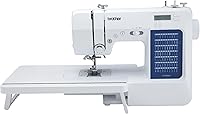
The sharp LCD screen shows the stitch choices and settings. That's what separates it from a mechanical machine: you select a stitch and the CP100X sets the width and length for you instead of you turning dials.
What the CP100X includes in the box
Brother packs a lot into this machine. You get the wide table for quilts and large garments, plus a hard case for storage.
The foot set covers zigzag, buttonhole, zipper, button sewing, overcasting, blind stitch, monogramming, 1/4-inch piecing, walking and quilting work. A quilt guide, three bobbins, a needle set, a twin needle, a seam ripper and the usual small tools come with it.
That's enough to start sewing without buying extra feet. Note that the monogramming foot is for decorative stitches only; the CP100X doesn't do lettering.
Our score weighs specs, features and the fit to what you're shopping for.
Who the Brother CP100X suits
Buy the CP100X if you've sewn on a basic machine and want more stitches, buttonhole styles and quilting room without jumping to a large embroidery model. It rewards a sewer who's comfortable reading a screen and trying new stitch patterns.
Home sewers who make garments, curtains and home décor will use the wide table and the decorative stitches. Quilters get the walking foot and quilting foot plus the extra table width for feeding a quilt through.
People who want to sew and quilt on one machine find that combination here.
Skip it if you're brand new to sewing and want the fewest settings possible. A mechanical machine with a dial and a handful of stitches asks less of you at the start.
Also skip it if your sewing table is small; the 20-inch width needs room to sit steady.
The automatic needle threader helps here too. Brother describes the one-step threader as easier than earlier versions and says it reliably pushes thread through the needle.
That takes one fiddly step out of starting each project.
The specs that matter in daily use
The number that shapes your sewing is 100 built-in stitches, and the second is the wide table. Together they decide whether the CP100X covers your projects or leaves you wishing for more.
The stitches split across utility, decorative and heirloom functions. Utility stitches handle seams, hems and repairs; decorative stitches add patterns to edges and panels; heirloom stitches suit fine finishing.
Eight auto-size one-step buttonholes mean you select a style and the machine sizes the buttonhole to the button, so you don't set the length and width by hand each time.
The metal frame matters for thick work. Brother says the durable metal frame and quality construction let the machine tackle anything from thick denim to heavy quilts.
A metal frame holds alignment better than a plastic shell when the needle pushes through several layers. The fixed needle bar keeps the needle in place while you work, which Brother says gives cleaner stitching and even lines.
The machine weighs 10.5 pounds and measures 12 inches deep, 20 inches wide and 17 inches high. It's light enough to lift from a shelf but wide enough to need a steady table.
Power comes from a corded 120-volt supply, and Brother sells the CP100X for US use only.
Setting up the Brother CP100X
Set the machine up in this order: place it, fit the table, thread it, then practice. A steady table with space either side of the 20-inch body keeps the wide table from overhanging and wobbling while you sew.
Put the CP100X on a firm surface near an outlet. Fit the wide table when you plan to quilt or sew large garments, and take it off when you need the free arm for cuffs and sleeves.
Then thread the machine following the diagrams Brother includes. The one-step automatic needle threader pushes the thread through the needle, so you don't have to squint at the eye.
Wind a bobbin and load it through the Quick-Set bobbin system, then bring the bobbin thread up. The LCD screen and the manual walk you through stitch selection and the settings for each stitch.
Set the adjustable sewing speed to a slow pace while you learn the screen, then speed up as you get comfortable.
Run a few practice seams on scrap fabric from your project. Check the stitch length and width, the tension and the needle for the fabric.
Do this before you sew a real seam, because a test seam catches a threading or tension problem while the fabric is still spare.
Sewing and quilting with the CP100X
The CP100X is at its best when you use the stitch range and the wide table together. A garment maker can sew a seam with a utility stitch, finish the edge with an overcasting stitch and add a decorative touch with a built-in pattern, all without changing machines.
For buttonholes, fit the buttonhole foot and pick one of the 8 auto-size styles. The machine sizes the buttonhole to the button you place in the foot.
That saves the measuring and test buttonholes a manual machine needs.
Quilters get the walking foot and the quilting foot plus the wide table. The walking foot feeds the top and bottom layers together, which helps keep quilting lines from puckering.
The quilt guide helps keep straight lines across the quilt. The extra table width supports the weight of a quilt so it doesn't drag on the needle.
Brother's fixed needle bar keeps the needle steady, which shows most on thick seams and long quilt lines. Slow the speed for denim hems, bag straps and quilt binding.
On thick seams, fold the fabric so the needle passes through fewer layers at once.
Threading, buttonholes and stitch settings
The CP100X takes most of the guesswork out of stitch settings. Select a stitch on the screen and the machine sets the width and length, so you're not turning dials and checking a chart for each one.
The automatic needle threader does the hardest part of threading for you. Follow the threading path for the upper thread, then let the threader push the thread through the needle.
The Quick-Set bobbin system drops the bobbin in from the top, which is easier to see and load than a front-loading bobbin.
Buttonholes are the other place the computer helps. Pick a style, fit the buttonhole foot, and the CP100X sizes the buttonhole to the button.
Try it on scrap fabric first so you can see the finished size before you cut the opening.
Use the screen to check the recommended stitch for the fabric when you're unsure. The manual lists the settings for each stitch.
Keep the manual near the machine while you learn the menu, then you'll need it less as the stitches become familiar.
Care and storage for the CP100X
Keep the CP100X clean and covered and it will stay steady on the stitches that matter. The hard case Brother includes protects the screen and dials when the machine isn't in use.
Clean lint from the bobbin area and the feed dogs after each big project. Lint builds up under the needle plate and can cause skipped stitches or a jammed bobbin.
Brush it out with the cleaning brush in the box and follow the manual for removing the plate.
Change the needle when it dulls or bends. A bent needle leaves marks and can hit the plate.
Use the right needle for the fabric: a ball point for knits and a sharp for woven fabric. The box includes a ball point needle to start with.
Oil the machine only as the manual directs. Not every computerized machine needs oil in the same places, so follow Brother's schedule rather than adding oil at random.
Keep the machine covered when it's not sewing. The hard case keeps dust off the screen and the stitch mechanism, and it protects the machine if you store it on a shelf.
Store the feet and accessories in the pouch so you can find them when a project needs them.
Where the Brother CP100X falls short
The CP100X is not the easiest first machine. The screen and stitch menu ask for some study time, and a total beginner may find a dial-based mechanical machine quicker to learn.
Plan on an evening with the manual and a few practice seams.
The 20-inch width is the other trade-off. The wide table is a benefit for quilts, but the machine plus table needs a good-sized table to sit on.
If your sewing space is a corner of a small room, measure before you buy. The machine weighs 10.5 pounds, so lifting it in and out of storage is manageable but not a one-hand job.
The monogramming foot may mislead. It's for sewing decorative stitches, not letters, so don't buy the CP100X expecting to monogram names.
The machine doesn't do lettering.
The 120-volt US-only rating limits you if you move abroad. Brother states the machine is intended for sale only in the US at 120 volts, and other use or sale may void the warranty.
Keep that in mind if your plans include living overseas.
Alternatives worth a look
The CP100X isn't the only Brother in this class. Two mechanical models and one other computerized machine give you different trade-offs on stitches, simplicity and price.
Brother ST371HD
The Brother ST371HD is the choice if you want a sturdy mechanical machine for heavy fabric. It skips the screen and the stitch menu and gives you dials and a set of utility and decorative stitches.
For thick denim, canvas and bag-making, the simpler controls and the heavy-duty build suit a sewer who doesn't need 100 stitches.
Brother XR3774
The Brother XR3774 targets sewers and quilters who want a wide table and a good stitch range. It's a closer rival to the CP100X for quilting than the mechanical machines.
Compare the stitch counts and the included feet between the two before you choose, because both bring quilting features to a home machine.
Brother XR9550
The Brother XR9550 is the other computerized option to weigh against the CP100X. It also brings a wide stitch range and quilting features.
Look at the screen, the feet and the table size side by side, since those are the differences you'll feel in daily use.
If you're still weighing a simpler first machine, the Brother LX27NT sewing machine reviews cover a lower-cost mechanical option with fewer settings. It's the kind of machine that asks less of a beginner than the CP100X's screen does.
The verdict on the Brother CP100X
The Brother CP100X is a buy for the sewer who wants computerized stitches and quilting room at home, and it earns a 7.9 score. The 100 stitches, 8 auto-size buttonholes, wide table and 10 feet cover everyday sewing and quilting in one machine.
The hard case and metal frame add to the value.
Skip it if you're brand new and want the fewest controls, or if your table space is tight. Pick a mechanical machine like the ST371HD for thick fabric and simple dials.
Pick the CP100X when the stitch range, the buttonhole styles and the wide table are the features you'll use most. Check the table space in your sewing room against the 20-inch width before you order.
Those Brother CP100X sewing machine reviews come down to one question: will you use the stitches and the quilting table? If yes, this machine gives you the room to grow.
Frequently asked questions
How many stitches does the Brother CP100X have?
The CP100X has 100 built-in stitches covering utility, decorative and heirloom styles. It also makes 8 styles of auto-size one-step buttonholes.
Pick the stitch on the screen and the machine sets the length and width for you.
What feet come with the Brother CP100X?
The box holds 10 feet: zigzag, buttonhole, zipper, button sewing, overcasting, blind stitch, monogramming, 1/4-inch piecing, walking and quilting. A quilt guide, three bobbins, a needle set and a hard case come with them.
Does the Brother CP100X come with a hard case?
Yes. The CP100X includes a protective hard case for storage.
It covers the machine when you're not sewing and keeps dust and knocks off the screen and dials.
The case adds a little height to the machine when you put it away.
Can the Brother CP100X quilt large projects?
The wide table gives you room to feed a quilt through, and the walking foot and quilting foot help move thick layers. The 20-inch width needs table space.
For very large quilts, a machine with a longer arm gives more room beside the needle.
Can I use the Brother CP100X outside the US?
No. Brother builds the CP100X for sale in the US at 120 volts.
Using it on another voltage can void the warranty.
If you move overseas, plan to buy a machine rated for your local power supply instead.
Is the Brother CP100X good for thick fabric like denim?
Brother says the metal frame and feed system let the machine tackle thick denim and heavy quilts. Use a sturdy needle and a slower speed for thick seams.
Fold seams so the needle passes through fewer layers at once.