Brother SM3701 Sewing Machine Review: Worth It? (November 2026)
The Brother SM3701 is a good buy for a beginner who wants decorative and quilting stitches without spending much. Its 37 stitches and five feet cover everyday sewing, though the Brother XM2701 is the better all-round starter if you want the same idea with a lighter, simpler setup.
On this page (8 sections)
The Brother SM3701 is a good buy for a beginner who wants decorative and quilting stitches without spending much. It packs 37 stitches and five feet into a 12.9 lb machine, which is more variety than most budget starters offer.
The trade-off is that it's light, so heavy seams need a steady hand.
This review walks through what the SM3701 actually gives you, where it falls short, and which other Brother models suit different sewers better. If you've been reading brother sm3701 sewing machine reviews and want a straight answer, here it is: buy it for stitch variety on a budget, and skip it if you plan to sew thick fabric all day.
The Brother SM3701 at a glance
The SM3701 is a light, full-feature mechanical machine aimed at new sewers and at anyone who wants decorative stitches without a computerised interface. Brother lists 37 built-in stitches and 74 stitch functions, including blind hem, decorative and quilting stitches.
A one-step auto-size buttonhole rounds out the set.
Brother SM3701: Best for decorative stitches on a budget

- 37 built-in stitches
- One-step auto-size buttonhole
- Five quick-change feet
- Free arm
A light, affordable machine with more stitches than most starters get. Best for sewers who want blind hems, decorative patterns and quilting stitches in one basic machine.
Pros
- 37 stitches and 74 stitch functions for the price
- Five feet included, covering zips, buttonholes and blind hems
- Free arm for cuffs, sleeves and trouser legs
- Built-in needle threader and drop-in bobbin
- Brother's 25-year limited warranty
Cons
- 12.9 lb is light enough to shift when you push hard on thick seams
- No speed slider, so you control pace with the foot pedal
- The XM2701 gives you a similar feature set for less fuss
Our score weighs specs, features and buyer feedback against what you're shopping for. At 7.2 it's a solid machine with a clear limitation: it's built to be light and affordable rather than to power through denim or canvas.
For hems, home décor and simple garments it holds up well.
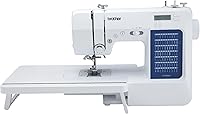
The white body and simple dial controls keep it easy to learn on. There's no screen or menu to work through, so you set a stitch by turning a dial and checking the guide.
That's a real advantage for a first machine.
Who the Brother SM3701 suits
Buy the SM3701 if you're learning to sew and want room to experiment. The 37 stitches mean you can move from straight seams to zigzag finishing and blind hems without buying a second machine.
The one-step buttonhole is a genuine help on shirts, bags and cushion covers.
It also suits someone returning to sewing after years away. The controls are simple enough to relearn quickly, and the free arm makes small repairs on clothes less awkward.
Skip it if your main projects involve thick layers. The machine weighs 12.9 lb, which tells you the frame is light.
Denim hems, upholstery fabric and multiple layers of fleece will need slow, careful feeding and may still shift.
Skip it too if you want the widest possible stitch library. A computerised model in the same brand family offers far more stitches for more money.
The SM3701 is the value option, not the feature leader.
Specs that matter in daily use
The 37 stitches and 74 stitch functions are the headline, and they translate into useful everyday options. You get straight stitch for seams, zigzag for finishing raw edges, blind hem for hems you don't want to show and a set of decorative patterns for crafts.
The quilting stitches let you try simple machine quilting without a specialist setup.
The one-step auto-size buttonhole is the feature most new sewers underrate. It builds a buttonhole in a single pass, so the two sides match and the size adjusts to your button.
That removes one of the most frustrating tasks on a basic machine.
Five quick-change feet come in the box: buttonhole, zipper, zigzag, blind stitch and button sewing. Quick-change means you snap the foot on rather than screwing it into place, which makes switching between tasks faster.
The free arm exposes a narrow bed for cuffs, sleeves and trouser legs.
Setup aids matter as much as stitches. The SM3701 has a built-in needle threader and a jam-resistant Quick-Set top drop-in bobbin, plus an automatic bobbin winding system.
Together those remove most of the fiddly steps that put beginners off.
Weight and size are part of the daily picture. It measures 5.8 in deep, 12 in wide and 15.3 in tall and weighs 12.9 lb.
That's light enough to move between a table and a cupboard, though light also means less stability when fabric pulls.
The box also includes a darning plate, needle set, twin needle, four bobbins, an extra spool pin, a screwdriver, the power cord, an operation manual and an instructional DVD. The DVD is handy if you learn better by watching than reading.
Setting up the Brother SM3701
Set up is straightforward and covered by the manual and DVD. Start by placing the machine on a stable table at a height where you can sit with your elbows roughly level with the bed.
Thread the machine following the numbered path, then use the built-in needle threader to pull the thread through the eye.
Wind a bobbin with the automatic winder, drop it into the top-loading bobbin case and bring the bobbin thread up. The Quick-Set design is meant to prevent jams, but check the thread sits in the right slot before you start.
Choose a stitch on the dial and set the length and width for your fabric. Run a test on a scrap of the same fabric first.
Tension, stitch length and presser foot pressure all affect the result, and a test piece tells you more than any guide.
Fit the foot you need. For a first project, the zigzag foot handles straight and zigzag seams.
Switch to the zipper foot for zips and the buttonhole foot when you're ready to try a buttonhole.
If you get stuck, Brother's technical support is free by phone and online for the life of the machine. For more setup help, our guide to the Brother CS5055 sewing machine reviews covers threading and bobbin basics that apply across Brother models.
Keeping it running well
Routine care is mostly cleaning and the right supplies. Brush lint from the bobbin area and under the needle plate after each project, since lint buildup causes skipped stitches and tension problems.
Follow the manual for how often to oil and where.
Use fresh needles and match the needle type to the fabric. A blunt or wrong needle does more damage to stitch quality than any setting.
Change the needle after heavy projects or when you hear a thumping sound.
Keep the machine covered when it's not in use. Dust settles into the bobbin case and feed dogs, and a simple cover saves cleaning later.
Store the feet and accessories together so you don't lose the small ones.
Have the machine serviced occasionally if you sew often. A light machine benefits from a professional clean and tune, and the 25-year limited warranty is worth keeping the receipt for.
Check what the warranty covers before you rely on it.
Where the Brother SM3701 falls short
The main trade-off is weight and stability. At 12.9 lb the machine is easy to store but light on the table.
Thick seams can make it shift or struggle, so you'll feed fabric slowly and may need to hand-turn the wheel at corners.
There's no speed control slider. On this machine your pace comes from the foot pedal, which is fine for most sewing but less precise for very slow, detailed work.
Computerised models in the same brand family offer adjustable speed.
The stitch count is good for the price but not huge. If you want monograms, lettering or hundreds of stitch patterns, the SM3701 won't get you there.
It's a mechanical machine built around the essentials.
Finally, the light build means it's not the machine for heavy-duty work. If your sewing is mostly curtains and light garments, that's no problem.
If it's denim, canvas or bag-making with thick layers, look at a sturdier model.
Alternatives worth comparing
The SM3701 makes most sense when you weigh it against the other Brother starters. Each alternative below solves a slightly different problem.
Brother XM2701
The Brother XM2701 is the better all-round first machine. It has 27 built-in stitches and six feet, including a narrow hemmer that the SM3701 doesn't include.
It's slightly lighter at 12.6 lb and carries a similar setup with an automatic needle threader and drop-in bobbin. Choose the XM2701 if you want the simplest possible start; choose the SM3701 if you want more decorative stitches.
Brother ST371HD
The Brother ST371HD is the heavy-duty option in this group. It's built to handle thicker fabric than the SM3701 and suits sewers whose projects lean toward denim, canvas and home décor.
If the SM3701's light frame worries you, this is the model to look at instead. The trade-off is a heavier machine that's less convenient to store.
Brother XR3774 and XR9550
The Brother XR3774 and the Brother XR9550 sit further up the range. Both add quilting-focused features and more capability than the SM3701, and the XR9550 adds a computerised interface and a wider stitch selection.
Pick one of these if you already know you'll quilt or want lettering and more stitches. For a first machine, the SM3701's lower price and simpler controls are easier to live with.
Verdict
Buy the Brother SM3701 if you're a beginner who wants decorative and quilting stitches on a tight budget, and you'll mostly sew light to medium fabric. The 37 stitches, one-step buttonhole, five feet and free arm cover everyday projects well.
Our score of 7.2 reflects that value plus the limits of a light machine.
Skip it and choose the Brother XM2701 if you'd rather start with the simplest setup and six feet. Choose the Brother ST371HD if thick fabric is a regular part of your sewing.
And if you're still comparing brother sm3701 sewing machine reviews against other models, decide by the fabric you'll sew most: light and decorative points to the SM3701, heavy-duty points elsewhere.
Frequently asked questions
How many stitches does the Brother SM3701 have?
It has 37 built-in stitches and 74 stitch functions. That covers straight stitch, zigzag, blind hem, decorative patterns and quilting stitches, plus a one-step auto-size buttonhole.
For most beginners that is more than enough variety.
Does the Brother SM3701 have a free arm?
Yes. The free arm exposes a narrow bed so you can slide cuffs, sleeves and trouser legs around it.
That makes hemming and repairing ready-made clothes much easier than working on a flat bed alone.
Is the Brother SM3701 good for beginners?
It is a reasonable first machine. The built-in needle threader and drop-in bobbin remove two of the fiddliest setup steps, and the 37 stitches let you try decorative work early.
Budget for practice fabric before you start a real project.
What feet come with the Brother SM3701?
Five quick-change feet ship in the box: buttonhole, zipper, zigzag, blind stitch and button sewing. Between them you can sew basic seams, insert zips, finish edges and attach buttons without buying extras first.
Does the Brother SM3701 come with a warranty?
Brother backs it with a 25-year limited warranty and free technical support by phone and online for the life of the machine. Keep your receipt and read the terms, since the long warranty period usually covers the frame rather than every part.