7 Best Singer Sewing Machines for Beginners (October 2026)
The best Singer sewing machines for beginners include the Singer 4423 for varied fabrics, the Singer M3330 for varied crafts, and the Singer 4411 for denim projects.
On this page (5 sections)
The best Singer sewing machine for beginners depends on the projects you want to make. The 4423 gives you options for varied fabrics, while the M1500 and MX60 simplify stitch setup with preset settings.
If you are buying your first machine, start with the work you expect to do most: mending, crafts, simple garments, or thicker materials. A long stitch menu is useful only if you plan to explore those options, while fewer adjustments can make early practice easier.
Our picks at a glance
-
1

-
2

-
3
How we chose Singer sewing machines for beginners
We compared stitch controls, threading features, fabric handling and included accessories against common first projects such as mending, crafts and simple garments. The picks cover both preset controls for a simpler start and adjustable settings for beginners who want to grow into more techniques.
A beginner may value clear setup and a manageable control panel more than a long stitch menu. Someone who plans to work with denim, cuffs or decorative projects may prefer a broader set of features.
| Product | Best for | Stitch applications | Threading | Buttonhole | Our score |
|---|---|---|---|---|---|
| Singer 4423 | varied fabrics | 97 | Automatic needle threader | One-step | 8.8 |
| Singer M3330 | varied crafts | 97 | Built-in needle threader | One-step | 7.6 |
| Singer 4411 | denim projects | 69 | Four-step | 7.4 | |
| Singer M1500 | easy first seams | 57 | Four-step | 7.4 | |
| Singer MX60 | sewing classes | 57 | Four-step | 7.1 | |
| Singer M3500 | stitch exploration | 110 | Automatic needle threader | One-step | 7.0 |
| Singer M2100 | preset settings | 63 | Four-step | 6.8 |
Which Singer beginner sewing machine fits each project?
The right model depends on your first projects and how much control you want. These picks are ordered by score, with each one suited to a different kind of beginner.
Singer 4423: Best for varied fabrics
- 97 stitch applications
- Automatic needle threader
- One-step buttonhole
- Extra-high presser foot lift
The 4423 combines easier threading with a wide range of stitches and features for layered or thick fabric. It suits a new sewer who expects to try more than basic repairs.
Pros
- Automatic needle threader
- Adjustable presser foot pressure
- Free arm for hems and cuffs
Cons
- More settings to learn than a preset-stitch model
- Heavier than the compact options
The Singer 4423 is the strongest all-around choice for a beginner who wants to learn on one machine and try different projects. Its automatic needle threader and transparent top-drop-in bobbin make two common setup steps easier to see and manage.
It has 97 stitch applications, including basic, stretch and decorative options. The one-step buttonhole reduces the number of stages involved in making buttonholes.
The 4423 is designed for thicker fabrics such as denim, canvas and leather. An extra-long stitch length option, adjustable presser foot pressure and extra-high presser foot lift give you more ways to handle different fabric weights and layers.
The free arm helps with pant hems, cuffs and collars. Choose it if you want flexibility and expect to sew more than occasional repairs; skip it if the extra controls and heavier build would go unused.
Singer M3330: Best for varied crafts
- 97 stitch applications
- Built-in needle threader
- One-step buttonhole
- Front-loading bobbin
The M3330 offers basic, decorative and stretch stitches, along with an easy stitch selection dial. Its included feet and guides support a range of early projects.
Pros
- Built-in needle threader
- One-step buttonhole
- Free arm for cuffs and hems
Cons
- Front-loading bobbin takes a different setup routine than a top-drop-in system
- More stitch choices may take time to learn
The Singer M3330 suits a beginner who wants both basic sewing and room to try decorative or stretch stitches. It offers 97 applications, a built-in needle threader and a one-step buttonhole.
Its stitch selection dial makes it easy to choose an option, while adjustable stitch length and width let you tailor settings to a project. The front-loading bobbin has a different setup routine from a top-drop-in system, so practice winding and inserting it before starting a garment.
Included accessories include general-purpose, buttonhole, button-sewing and zipper feet, along with an edge and quilting guide. The free arm helps with cuffs, hems and sleeves.
Choose the M3330 if you want varied early projects and are comfortable learning a few settings. Skip it if you would rather have preset stitch length and width, as on the M1500.
Singer 4411: Best for denim projects
- 69 stitch applications
- 1,100 stitches per minute
- 60% more motor power than standard models
- Four-step buttonhole
The 4411 is aimed at sewing thicker materials such as denim, canvas and leather, while still offering essential, decorative and stretch options. Its high speed may suit someone ready to control the pedal carefully.
Pros
- Features for thick fabric
- 69 stitch applications
- Accessory kit includes four presser feet
Cons
- Four-step buttonhole takes more steps than a one-step design
- High speed may be more than a first-time sewer needs
The Singer 4411 is for beginners who already expect to sew thick fabric such as denim, canvas or leather. It has 69 stitch applications across essential, decorative and stretch options, along with features aimed at heavier materials.
Its speed reaches 1,100 stitches per minute, so begin slowly and practice controlling the pedal on scraps. The four-step buttonhole takes more stages than the one-step design on the 4423 or M3330.
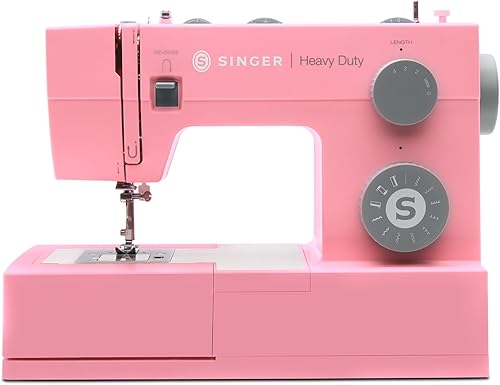
The accessory kit includes four presser feet, a quilting guide, bobbins and other sewing items. The pink finish may also appeal if you want a machine with a brighter look.
Choose the 4411 if thick fabric is a regular part of your plans and you want a focused stitch range. Skip it for occasional light repairs if its extra speed and heavy-fabric focus do not solve a need you have.
Singer M1500: Best for easy first seams

- 57 stitch applications
- Preset stitch length and width
- Marked threading guides
- Four-step buttonhole
The M1500 keeps setup simple with a stitch selector dial and preset stitch length and width. It fits beginner projects such as basic mending, crafts and simple garments.
Pros
- Preset settings reduce early adjustments
- Threading guides are marked on the machine
- Portable design
Cons
- Less control over stitch length and width
- Four-step buttonhole requires several stages
The Singer M1500 is a simple choice for basic sewing and mending. Preset stitch length and width remove two adjustments, and marked guides show the winding and upper-threading paths.
Six built-in stitches provide 57 applications, including straight, zigzag, blind hem and a four-step buttonhole. Select the stitch with the dial and practice on scraps before sewing a finished item.
The M1500 is lightweight and portable, which can suit a sewing class or a small workspace. It includes an all-purpose foot, zipper foot, buttonhole foot, darning plate, needles and bobbins.
Choose it if you want basic controls for crafts, simple garments or repairs. Skip it if you already know you need to adjust stitch length and width often; the M3330 offers that control.
Singer MX60: Best for sewing classes

- 57 stitch applications
- Preset stitch length and width
- Compact portable design
- Accessory kit included
The MX60 offers preset stitch settings in a compact format for small work areas or sewing classes. It covers simple mending, crafts and basic garment work.
Pros
- Preset settings suit beginners
- Compact for storage or transport
- Includes basic sewing accessories
Cons
- Preset settings limit adjustment
- Four-step buttonhole
The Singer MX60 suits a beginner with limited storage or plans to carry a machine to class. Like the M1500, it uses preset stitch length and width, with 57 stitch applications for mending, crafts and basic sewing.
Its compact design is paired with a heavy-duty metal frame. The accessory kit includes an all-purpose foot, zipper foot, buttonhole foot, darning plate, needles and Class 15 bobbins.
The MX60 keeps stitch setup simple, though preset settings limit how much you can customize a stitch for a particular fabric or seam. It also uses a four-step buttonhole.
Choose it when portability and simple controls matter most. Skip it if you need adjustable stitch settings or expect to work often with thick layers; the 4423 is a better match for those plans.
Singer M3500: Best for stitch exploration

- 110 stitch applications
- Built-in needle threader
- One-step buttonhole
- Free arm
The M3500 has the broadest stitch selection in this group, including basic, decorative and stretch stitches. It works for a beginner who wants options and is comfortable learning a larger set of controls.
Pros
- 110 stitch applications
- Automatic needle threader
- One-step buttonhole
Cons
- Many options can feel like extra setup for basic repairs
- Front compartment bobbin setup may need practice
The Singer M3500 is for a beginner who wants to explore a broad range of stitches. It offers 110 applications, including basic, decorative and stretch stitches, plus adjustable stitch length and width.
Its automatic needle threader and one-step buttonhole help with setup. The free arm reaches cuffs and hems, and the 5.7 in sewing space from needle to tower gives you room to work on larger pieces.
That many applications can be more choice than you need for simple repairs. Start with a straight stitch and learn the controls in stages before trying decorative options.
Choose the M3500 if you expect to explore varied projects and want to grow into more settings. Skip it if extra stitch options would distract from a simple first goal; the M1500 has a more focused setup.
Singer M2100: Best for preset settings

- 63 stitch applications
- Preset stitch length and width
- Marked threading guides
- Four-step buttonhole
The M2100 keeps stitch choice and settings simple, with preset length and width. It suits early mending and craft projects where straightforward controls matter more than adjusting each stitch.
Pros
- Preset stitch settings
- Threading guides marked on the machine
- Includes an all-purpose foot and other accessories
Cons
- Fewer adjustment choices
- Four-step buttonhole
The Singer M2100 suits a beginner who wants preset controls for home sewing or class. It has 63 stitch applications, with stitch length and width set in advance.
The selector dial displays the available stitches, and threading guides are marked on the machine. A four-step buttonhole is included, along with an all-purpose foot, zipper foot, buttonhole foot, button-sewing foot and darning plate.
Its control approach is close to the M1500, though the M2100 has 63 applications compared with the M1500's 57. Check the stitch options against your likely projects, then focus on learning the basics rather than trying every stitch at once.
Choose the M2100 if preset settings and a practical mix of stitches appeal to you. Skip it if you want to adjust stitch length and width yourself.
How should you choose a Singer machine for your first projects?
Choose a Singer by matching its controls and fabric features to the work you plan to do most often. Write down two or three likely projects, such as hemming trousers, repairing seams or sewing a simple cotton item, and use that list to narrow the choices.
For light mending and crafts, a preset model can reduce early decisions. If you expect to sew stretch fabrics or experiment with decorative stitches, adjustable settings and a broader stitch menu may be worth learning.
Is a Singer sewing machine for beginners easier with preset stitches?
Preset stitch length and width can simplify early practice because you choose a stitch without adjusting those settings. The M1500, MX60 and M2100 use this approach.
Adjustable settings give you more control when projects change. The M3330 and M3500 let you adjust stitch length and width, and the 4423 adds adjustable presser foot pressure.
Do beginners need many stitch applications?
Most first projects use basic stitches, so a large number of applications is not essential. Consider extra options if you already plan to sew stretch fabric, add decorative details or try several kinds of crafts.
Our guide to types of sewing machine stitches explains common stitch uses. For a broader look at machine features, see how to pick the best sewing machine for your home.
Should you choose a Heavy Duty Singer as a beginner?
A Heavy Duty model may suit a beginner who already plans to sew thicker fabric or multiple layers. The 4423 and 4411 include features for denim and canvas, while the 4423 also offers adjustable presser foot pressure for lighter fabrics.
For everyday mending and light crafts, choose based on the work rather than the Heavy Duty label. Our Singer 4411 vs 4423 comparison explains how those models differ.
What should you learn before sewing your first project?
Learn threading, bobbin setup and stitch selection before sewing a finished item. Practice on scraps so you can see how the machine feeds material and how the seam looks.
Singer’s step-by-step threading guide can help you follow the upper-thread path. Review how to wind a bobbin before loading the machine, and check the manual for the bobbin style and threading path for your model.
Choose a needle and thread that suit the fabric, and replace a bent or damaged needle before sewing. Our sewing machine needle size chart explains how to match a needle to the material.
How can you set up a Singer sewing machine without common beginner mistakes?
Set the machine on a stable surface with enough room to support fabric as it passes the needle. Keep the power off while threading or changing the needle, presser foot or bobbin.
Follow the numbered threading path and make sure the presser foot is raised while threading the upper thread. Keep a short tail of both threads behind the presser foot before you begin sewing.
Insert the bobbin in the direction shown in your machine’s manual, then turn the handwheel toward you to bring up the bobbin thread. A thread nest under the fabric often means the upper thread or bobbin needs to be rethreaded, so stop and check the path instead of pulling the fabric free.
Place a scrap under the foot and lower the presser foot before pressing the pedal. Start with a straight stitch, use a gentle speed, and guide the fabric with your hands rather than pushing or pulling it.
How should a beginner care for a Singer sewing machine?
Keep lint and thread scraps from building up around the needle plate and bobbin area. Turn the machine off before cleaning, use the brush or tools intended for the machine, and follow its manual for any cleaning or oiling steps.
Use suitable needles and replace them when they become bent, blunt or damaged. Store the machine covered when it is not in use, and keep bobbins, feet and small accessories together so they are easy to find.
Which Singer sewing machine should a beginner choose?
Choose the 4423 if you want varied stitches and features for thicker fabric, or the M1500 if preset controls make learning easier. Pick the MX60 for a compact class or storage option, the M3330 for adjustable settings and varied crafts, or the M3500 if exploring stitch variety is part of your plan.
If you are still comparing brands, read our best Brother sewing machines for beginners guide alongside these Singer options. For a Singer sewing machine for beginners, the best fit is the model whose setup, controls and fabric range match the projects you will actually sew.
Our top 3 picks at a glance
-
1
-
2
-
3
Frequently asked questions
Which Singer sewing machine is easiest for a beginner?
The Singer M1500 is a straightforward choice if you want preset stitch length and width. Its selector dial and marked threading guides help you get through basic setup, and you can focus on learning to guide fabric and sew a straight seam.
For a portable option with similar preset controls, compare the MX60.
Is the Singer 4423 suitable for a beginner?
Yes. The 4423 has an automatic needle threader and one-step buttonhole, which can simplify two setup tasks.
Its wider range of stitches and adjustable controls also give you room to try different projects.
If you want fewer choices while you learn, a preset model such as the M1500 may feel more direct.
Should a beginner choose a Singer Heavy Duty machine?
Choose a Heavy Duty model if you plan to sew denim, canvas or several fabric layers. The 4423 and 4411 include features aimed at thicker materials, though the 4411's high speed calls for careful pedal control.
For occasional mending and light crafts, a simpler machine with preset settings is a sensible start.
What should a beginner learn first on a Singer sewing machine?
Start by following the threading path, winding and inserting the bobbin, selecting a straight stitch and practicing on fabric scraps. Then learn to guide the fabric without pulling it and to secure a seam with reverse stitching when your model supports it.
Our first-day sewing machine basics walk through these early steps.