Singer 7285Q Sewing Machine Review: Worth It? (November 2026)
The Singer 7285Q suits quilters who want a wide table and a walking-style feed in one machine, but its manual buttonhole and thread cutter keep it out of the best overall spot. Buy it for quilting projects; choose a computerized Brother if you want automated buttonholes and a one-step needle threader.
On this page (8 sections)
The Singer 7285Q is a quilting-focused mechanical machine with a wide extension table and plenty of utility stitches. It's a solid buy for quilters on a mid-range budget, but not the best overall pick for most sewers.
If you mainly piece quilts and sew everyday seams, the Singer 7285Q does the job. If you also want automated buttonholes, a one-step needle threader and a large workspace for less fuss, a computerized Brother like the CS7000X is the stronger choice.
Here's how singer 7285q sewing machine reviews should weigh those trade-offs.
The Singer 7285Q at a glance
The Singer 7285Q combines mechanical dial controls with quilting hardware: a wide table and a metal frame. It's built for sewers who piece and quilt but still want a machine for basic garment sewing.
Brother CS7000X: Best overall
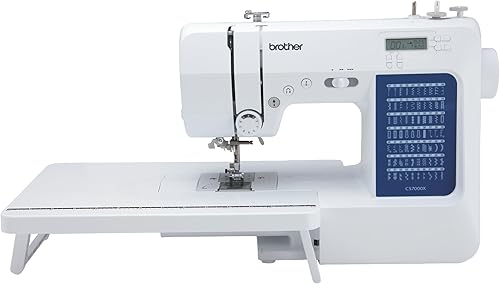
- 70 built-in stitches
- LCD display
- 10 presser feet plus quilt guide
- Wide table and hard case
A computerized quilting machine with a wide table, a hard case and a large workspace. It gives most sewers the most features for the money.
Pros
- 70 built-in stitches and 7 one-step buttonholes
- Improved automatic needle threader
- Large needle-to-arm workspace for quilts
- Wide table, 10 feet, quilt guide and hard case included
- 25-year limited warranty
Cons
- Costs more than a mechanical quilting machine
- LCD menu takes a little learning
One note on the score: our score weighs specs, features and buyer feedback against what you're shopping for. The 7285Q's quilting package is genuinely useful, but its manual buttonhole and thread cutter hold it back from the top spot in this comparison.
The card above shows the machine we rate highest in this group, the Brother CS7000X. It earns that spot because its specs line up with what most sewers actually do week to week: piecing quilts, hemming garments, mending and the occasional buttonhole.
The 7285Q is a narrower tool, and that's fine as long as you know which job you're buying it for.
Put the two side by side and the split is clear. The 7285Q wins on mechanical simplicity and quilting hardware out of the box.
The CS7000X wins on automation, workspace and the number of accessories included. Neither machine is wrong.
They just answer different shopping questions.
Who should buy the Singer 7285Q?
Buy the Singer 7285Q if quilting is your main hobby and you want the wide table without paying computerized prices. It also suits sewers who prefer dials to menus and don't need automated buttonholes.
Skip it if your projects lean toward garments with frequent buttonholes. Setting a four-step buttonhole on a dial takes practice and repeats less consistently than a one-step electronic buttonhole.
Beginners who want an easier first machine should look at the best Singer sewing machines for beginners before deciding.
It's also worth being honest about how much quilting you actually do. A wide table earns its place only if you piece quilts larger than a wall hanging or work with layered fabric.
If your sewing is mostly pillowcases, tote bags and simple alterations, those features add footprint without adding much value, and a lighter machine with automated functions serves you better.
Sewers who share a machine with family should think about the learning curve too. Dials are easier for a casual user to grasp than a menu system.
That counts in the 7285Q's favor in a busy household where several people sit down at the same machine.
The specs that matter in daily use
The 7285Q's practical strengths are its quilting table and its metal frame, not its stitch count. A wide extension table attaches to the machine's bed and supports the weight of a larger quilt as you piece it.
That matters more than raw stitch numbers when you're working on anything bigger than a wall hanging.
The machine runs on a metal frame, which helps it stay stable when you sew over thick seams. It also has adjustable stitch length and width, plus a range of utility, stretch and decorative stitches.
The thread cutter on the side saves reaching for scissors, though it's a mechanical cutter rather than a push-button trimmer.
For comparisons on workspace and stitch variety, singer m1500 review covers a smaller Singer that suits light everyday sewing.
Two specs deserve more attention than the rest. The first is the feed system, which you set up with the walking-style foot for layered quilting projects.
That setup moves the top layer and the bottom layer together, so quilt backing, batting and top stay aligned without pinning every few inches. It's the feature that earns the machine its quilting label, and it's the one you'll notice most on your first large project.
The second is the metal frame. A frame keeps the needle bar steady when fabric thickness changes, so seams stay even as you cross a bulky intersection.
It also gives the machine weight on the table, which matters when you push a quilt through. On light projects you won't feel the difference.
On layered fabric, you will.
Setting up the Singer 7285Q
Set up is mechanical and mostly self-guided: raise the needle, thread the top path through the tension dials, then wind and load a Class 15 bobbin. The manual walks you through the order step by step.
Threading a mechanical machine takes more care than a computerized one with an automatic needle threader. Follow the numbered guides on the machine and keep the presser foot up while threading so the thread seats in the tension discs.
Once threaded, test on a scrap of your project fabric. Adjust top tension and stitch length until the stitches sit flat on both sides.
If you plan to quilt, fit the walking-style foot and lower the feed dogs for free-motion work only when your project calls for it.
Winding and loading the bobbin
The bobbin is the step most new owners get wrong first. Wind a Class 15 bobbin evenly so the thread fills the width of the bobbin and not a lump in the middle.
An unevenly wound bobbin causes tension swings and skipped stitches that no dial adjustment can fix.
Drop the bobbin into the case, run the thread through the case slot and leave a tail. Then raise the bobbin thread through the needle plate before you start to sew.
Keep a few wound spares on hand so a long seam doesn't stop you mid-project.
Care and maintenance
Clean lint from the bobbin area and under the needle plate after every few projects, and follow the manual's oiling points. Mechanical machines rely on clean, lightly oiled parts to keep stitch quality steady.
Use a small brush to clear lint around the feed dogs and bobbin case. Lint buildup is a common cause of skipped stitches and tension problems, so a two-minute clean after each big project saves troubleshooting later.
Change needles regularly and match the needle to the fabric: a universal needle for wovens, a denim needle for thick seams. A dull needle pulls fabric and can throw off stitch tension even when the dials are correct.
Store the machine with the cover on and the presser foot down to protect the feed dogs. Book a professional service once a year if you sew often.
Our guide to brother st371hd review shows how another mechanical machine handles similar upkeep.
If a stitch problem appears, work through the cheap checks first. Rethread the top path, recheck the bobbin, swap the needle and clean the lint.
Most tension trouble on a mechanical machine traces back to one of those four, not to the machine itself.
The trade-offs to know before buying
The biggest trade-off is the manual buttonhole. Four-step buttonholes on a dial need consistent fabric placement and practice to repeat the same size.
The thread cutter is mechanical, so it trims thread but doesn't offer the one-touch trimmer some computerized machines have. That's a small convenience loss, not a deal-breaker for quilting.
The stitch count is modest next to computerized rivals. If decorative stitches and lettering matter to you, a machine with a bigger library serves you better.
The 7285Q's strength is its quilting hardware, so judge it on that rather than on stitch numbers.
The wide table adds footprint. Check your sewing space before buying, since a table that stays attached needs room on the desk.
There's also the matter of repeatability. On a dial machine you set the buttonhole length by eye and by trial, so the second buttonhole on a placket may not match the first exactly.
A computerized machine stores the size and reproduces it on demand. For a quilt or a tote bag that difference is invisible.
For a shirt front with six buttonholes in a row, it shows.
Finally, think about how the machine will age. A mechanical machine has fewer electronic parts to fail, which some sewers count as a reliability plus.
The counter-argument is that automated features are the ones beginners rely on most. Decide which kind of simplicity you want before you buy.
Alternatives worth comparing
The strongest alternatives differ in exactly the areas where the 7285Q is weakest: automated buttonholes, threading and workspace. Each one below wins on a named need.
Brother CS7000X
The Brother CS7000X is the best overall pick for most sewers because it pairs 70 built-in stitches and 7 one-step buttonholes with a large needle-to-arm workspace. It includes a wide table, 10 presser feet plus a quilt guide, a hard case and an improved automatic needle threader.
If quilting and garment sewing both matter to you, this is the machine to beat in this group. The brother xr3774 review covers another Brother option with a quilting focus.
Its fixed needle bar keeps the needle in place while you work, which helps produce cleaner stitching and even lines. The jam-resistant drop-in top bobbin is easy to load and stays put.
The LCD display sets the stitch and the one-step buttonhole size, so repeat buttonholes match. With a hard case, a wide table and 10 feet in the box, it covers the quilting hardware the 7285Q offers while adding the automation it lacks.
Brother CS5055
The Brother CS5055 is the best beginner pick here. It has 60 built-in stitches, 7 one-step buttonholes, an LCD display and an automatic needle threader, with 7 feet in the box.
It skips the wide table and hard case, so quilters still want the CS7000X. For a first machine at a lower cost, it's the easiest of the three to learn on.
The feed system handles denim, tweed and other thick fabrics with little effort, and the LED-lit work area helps when you sew in dim light. The Quick-Set bobbin and fast winding system cut down setup time.
It's a smaller, lighter machine than the CS7000X at 10.5 pounds against 14 pounds, so it's easier to move between rooms or take to a class.
Singer Quantum Stylist 9960
The Singer Quantum Stylist 9960 offers 600 built-in stitches and 1,172 stitch applications, plus 13 presser feet, lettering and 13 one-step buttonholes. It's the choice for sewers who want the widest creative menu in one box.
It's a lot of machine to learn, so buy it for the stitch variety and monogramming, not as the simplest first machine.
The details are what sell it. Mirror imaging and stitch elongation let you reshape a stitch into a new design.
Built-in lettering handles monograms and custom text. The needle up and down setting makes pivoting at corners easy.
The start and stop button lets you sew without the foot pedal, and the speed control sets the pace for long seams or fine work. A thread trimmer cuts top and bottom threads at the press of a button.
Verdict
Buy the Singer 7285Q if quilting is your priority and you want a wide table without computerized prices. It's a capable quilting machine, but its manual buttonhole and thread cutter keep it behind the top pick.
For most sewers, the Brother CS7000X is the better buy because it adds automated buttonholes, an easier needle threader, a large workspace and a hard case. Choose the Singer Quantum Stylist 9960 only if you want the biggest stitch and lettering menu.
Singer 7285Q sewing machine reviews should end on that split: quilting first, convenience second.
Frequently asked questions
Does the Singer 7285Q need a special bobbin?
It takes standard Class 15 bobbins rather than a proprietary size. Keep a few spares on hand and wind them before you start a long seam, because running out mid-project means unthreading and starting again.
Is the Singer 7285Q good for free-motion quilting?
Yes, with the right setup. Lower the feed dogs and fit a darning or free-motion foot, then match thread and tension to the batting.
Practise on a scrap quilt sandwich first so you can judge stitch speed and tension before working on the real quilt.
How often should the Singer 7285Q be serviced?
Clean lint after every few projects and book a professional service once a year if you sew regularly. The manual covers routine oiling and cleaning points, and skipping those steps is a common cause of skipped stitches and tension trouble.
What is the main difference between the 7285Q and a computerized machine?
The 7285Q uses manual dials for stitch selection and buttonholes, while machines like the Brother CS7000X set stitches and one-step buttonholes electronically. Dials are simpler to learn, but computerized machines repeat a chosen buttonhole size more consistently.
Can the Singer 7285Q handle denim and thick fabrics?
It has a metal frame and a range of utility stitches suited to heavier fabric. Use a fresh denim needle and sew slowly over thick seams, and test on a scrap of the same fabric before committing to a garment.


