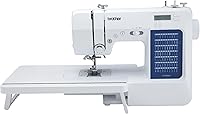
Singer M1500 Portable Sewing Machine Review: Worth It? (October 2026)
The Singer M1500 suits beginners who want a portable machine for basic sewing, crafts, and mending. Its preset stitch settings simplify setup, while the four-step buttonhole takes more steps than a one-step option.
On this page (9 sections)
- What the Singer M1500 offers
- How easy is the M1500 to set up?
- Is the four-step buttonhole a drawback?
- What projects suit the Singer M1500?
- Singer M1500 vs. Brother XM3700
- Singer M1500 vs. Brother FB1757X
- How should you care for and use the M1500?
- What common mistakes should you avoid?
- Is the Singer M1500 the right choice for you?
The Singer M1500 suits beginners who want a portable machine for basic sewing, crafts, and mending. It has preset stitch length and width, marked threading guides, and 57 applications from 6 built-in stitches.
Its main trade-off is the four-step buttonhole. If you want more stitch choices, a free arm, or an automatic needle threader, compare the alternatives below before deciding.
What the Singer M1500 offers
The Singer M1500 focuses on basic sewing with simple stitch selection. Its dial displays the available stitches, and preset stitch length and width mean you don't need to adjust those settings for each stitch.
Singer M1500: Best for portable beginners

- 6 built-in stitches
- 57 stitch applications
- Preset stitch length and width
- Four-step buttonhole
- Threading guides on machine
A choice for basic sewing, crafts, and simple mending. Preset stitch length and width reduce setup choices, though the buttonhole takes four steps.
Pros
- Preset stitch length and width
- Threading guides marked on the machine
- Includes all-purpose, zipper, and buttonhole feet
Cons
- Four-step buttonhole takes more steps than a one-step style
- No automatic needle threader is specified
Its stitch selection includes straight, zigzag, blind hem, multi-step zigzag, and scallop stitches, plus a four-step buttonhole. The accessory kit includes an all-purpose foot, zipper foot, buttonhole foot, darning plate, needles, bobbins, a needle plate screwdriver, spool pin felt, and a seam ripper with lint brush.
Singer describes the M1500 as lightweight and portable for sewing classes or smaller spaces. It weighs 9.7 lb, which may help if you expect to carry it, though you should still make sure it fits your storage area and work surface.
Who should choose the Singer M1500?
Choose the M1500 if you expect to sew simple projects and prefer preset stitch settings to choosing stitch length and width yourself. Its straight and zigzag stitches cover common tasks, while blind hem and buttonhole options let you try a few additional techniques.
It may also fit a small sewing area or a routine that includes taking your machine to class. Measure your storage spot and work surface before buying, and consider whether you'll have a stable place to guide fabric.
Skip it if automatic needle threading, a free arm, or a one-step buttonhole is a must for your projects. Those features are specifically included on the Brother XM3700, while the Brother FB1757X names a free arm and LED work area lighting.
If you're choosing your first machine, our guide to Singer sewing machines for beginners compares other options from the brand. You can also read how to pick the best sewing machine for your home to match machine features to the projects you plan to make.
How easy is the M1500 to set up?
The M1500 makes stitch selection and threading steps clear with labels on the machine. Guides for winding the bobbin and threading the upper thread are marked directly on the machine, so you can follow the path instead of relying on memory.
Start by placing the machine on a stable surface with enough room to support the fabric. Follow the marked bobbin-winding guide and upper-thread path, then check that the thread is seated correctly before you start sewing.
Turn the selector dial to the stitch you need. Because stitch length and width are preset, you can focus on choosing a suitable stitch and guiding fabric evenly rather than adjusting those settings first.
An automatic needle threader is not specified for the M1500. If guiding thread through a small needle eye is difficult for you, compare it with machines that name that feature, such as those in the Brother XM2701 vs GX37 comparison.
For a step-by-step start, see our guide to threading a Singer sewing machine. Then review first-day sewing machine basics before starting a project.
Is the four-step buttonhole a drawback?
The four-step buttonhole is a workable option for occasional buttons, but it requires more steps than a one-step style. The selector dial marks each step to guide you through the sequence and make a buttonhole sized for your project.
For a button or two on a garment or craft, the extra steps may be manageable. If you expect to make many buttonholes, the Brother XM3700's one-step auto-size buttonhole is a simpler feature to compare.
Practice on a fabric scrap before working on the finished item. Use the same fabric layers and interfacing you plan to use in the garment, and check that the opening fits your button.
What projects suit the Singer M1500?
The M1500's stitch applications support fashions, quilt piecing, crafts, and simple mending. Straight stitching handles many basic seams, zigzag can finish fabric edges, and the blind hem offers another option for hemming.
The machine may suit a beginner who wants to learn one project at a time without making stitch-length and width choices first. Its portable design can also help if you sew in a class or need to put the machine away between projects.
A free arm is not specified for the M1500. If you regularly sew cuffs, sleeves, or other small cylindrical items, compare it with a machine that names a free arm, such as the Brother XM3700 or FB1757X.
The presser feet guide explains how common feet support different sewing tasks. If thick layers are a regular part of your projects, first compare machines in our guide to sewing machines for thick fabric.
Singer M1500 vs. Brother XM3700
Choose the Brother XM3700 for more stitch choices, automatic needle threading, and a one-step buttonhole. Choose the M1500 if preset stitch length and width, its lighter stated weight, and the included sewing accessories better fit your needs.
Brother XM3700: Best for more stitch choices

- 37 built-in stitches
- Automatic needle threader
- Top drop-in bobbin
- One-step auto-size buttonhole
- Free arm
Consider the XM3700 if an automatic needle threader, one-step buttonhole, and more stitch choices matter to you.
Pros
- 37 built-in stitches
- Automatic needle threader
- One-step auto-size buttonhole
Cons
- Intended for sale in the US at 120 volts
The XM3700 has 37 built-in stitches, an automatic needle threader, a top drop-in bobbin, a free arm, and a one-step auto-size buttonhole. The M1500 has 6 built-in stitches with 57 applications, and its preset settings reduce the number of choices during setup.
The XM3700 weighs 12.5 lb, compared with the M1500's 9.7 lb. It's intended for sale in the US at 120 volts, so buyers elsewhere should check compatibility and warranty terms with Brother before choosing it.
Singer M1500 vs. Brother FB1757X
The Brother FB1757X suits projects that benefit from a free arm and LED work area lighting. The M1500 suits buyers who value preset stitch length and width and a broader set of named accessories.
Brother FB1757X: Best for cuffs and sleeves

- 17 built-in stitches
- Four-step buttonhole
- Reverse button
- Free arm
- LED work area lighting
This mechanical Brother offers 17 stitches, a free arm, reverse, and LED work area lighting. Its four-step buttonhole resembles the M1500's approach.
Pros
- 17 built-in stitches
- Free arm for sewing
- LED lighting
Cons
- Four-step buttonhole
- No automatic needle threader is specified
The FB1757X has 17 built-in stitches, a reverse button, and a four-step buttonhole. The M1500 also uses a four-step buttonhole, but offers 57 stitch applications across its 6 built-in stitches.
A free arm is not specified for the M1500. If cuffs and sleeves are routine projects, the FB1757X's named free arm is a clear reason to choose it instead.
How should you care for and use the M1500?
Keep the sewing area clean and follow the machine manual for routine care. The included seam ripper and lint brush can help with small cleanup tasks, and the darning plate is part of the accessory kit.
Use the right foot for the task. The all-purpose foot is a starting point for general sewing, while the zipper and buttonhole feet are included for those specific jobs.
Before sewing, check that the upper thread and bobbin are in place and that the fabric can move freely under the foot. Start on a scrap, especially when you are learning the buttonhole sequence or working with a new fabric.
What common mistakes should you avoid?
Don't assume the number of stitch applications means there are 57 separate built-in stitches. The M1500 has 6 built-in stitches with applications for different sewing uses.
Don't skip practice on a scrap when trying a new stitch or buttonhole. A short practice run lets you check the result and make sure your fabric layers and button opening suit the project.
Don't choose the M1500 for frequent sleeve work without considering the free-arm question. Since a free arm isn't specified for this model, buyers who often sew cuffs or sleeves should compare machines that explicitly include one.
Is the Singer M1500 the right choice for you?
Choose the Singer M1500 if you want portable, beginner-friendly sewing with preset settings for basic projects. It's a practical fit for crafts, simple mending, and learning common stitches, especially if a four-step buttonhole is acceptable.
Pick the Brother XM3700 if automatic needle threading, a one-step buttonhole, and 37 built-in stitches matter more. Pick the Brother FB1757X if you want a free arm and LED work area lighting; for more beginner options from Singer, see Singer sewing machines for beginners.
Frequently asked questions
Is the Singer M1500 good for beginners?
The Singer M1500 can suit beginners who want clear stitch selection and preset stitch length and width. Threading guides are marked on the machine, and its four-step buttonhole is marked on the selector dial.
How many stitches does the Singer M1500 have?
The M1500 has 6 built-in stitches that provide 57 stitch applications. These include straight, zigzag, blind hem, multi-step zigzag, scallop stitch, and a four-step buttonhole.
Does the Singer M1500 have an automatic needle threader?
An automatic needle threader is not specified for the M1500. Its guides for winding the bobbin and threading the upper thread are marked on the machine.
Can the Singer M1500 sew buttonholes?
Yes. The M1500 makes buttonholes through a four-step process marked on the stitch selector dial.
You move through each step to sew a buttonhole sized for your project, so it takes more interaction than a one-step buttonhole.